
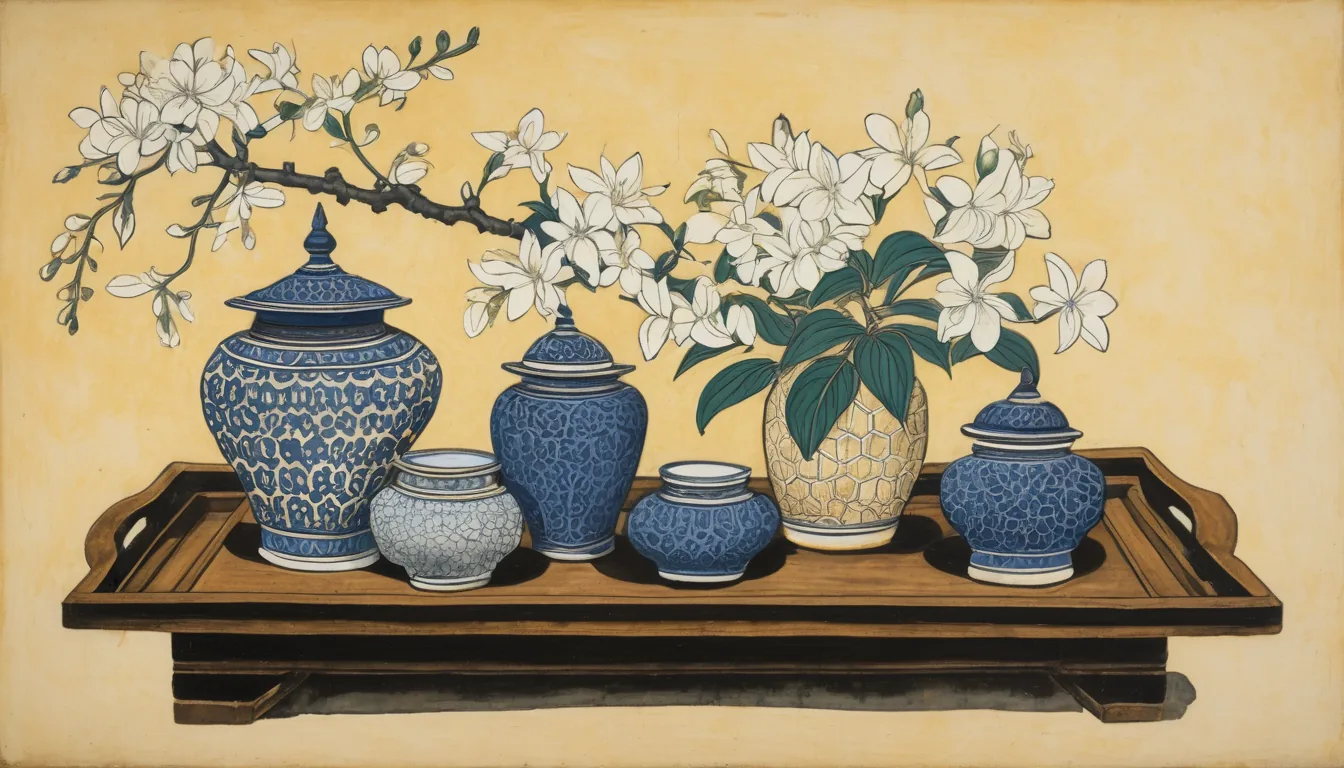
See pheung (สีผึ้ง, RTGS: si phueng, also romanised as see phung), known in English as Thai sacred wax or consecrated beeswax balm, is a traditional herbal and beeswax ointment compounded from wild honeycomb, botanical oils, aromatic woods, and consecrated chalk powders (phong phutthakhun) [1][6][10][18]. Originating as a protective lip salve inside historic Thai betel-chewing sets (chian mak), consecrated see pheung became a primary metta mahaniyom (goodwill and eloquent speech) medium in Thai Buddhist practice, housed in lidded containers (talap) and exemplified by the lineage of Luang Phor Thab of Wat Krabok Khuen Phueng in Rayong [3][4][8][11].
Overview and significance
In Thai lexicography, สีผึ้ง (si phueng) combines the verb สี (si, to rub or stroke across a surface) with the noun ผึ้ง (phueng, honeybee), meaning "compounded beeswax used for rubbing on the lips" (ขี้ผึ้งที่ปรุงแล้วใช้สำหรับสีปาก) [1]. It differs from uncompounded raw beeswax, which Thai dictionaries record as khi phueng (ขี้ผึ้ง, literary synonym mathuset มธุเศษ), the purified wax obtained by boiling honeycomb (รังผึ้ง) to cast candles or prepare ointments [2].
In the taxonomy of Siamese ritual objects analysed by historians Chris Baker and Pasuk Phongpaichit in the late-Ayutthaya epic Khun Chang Khun Phaen, consecrated lip wax is a constructed device transferring an adept's meditative power [17]. Whereas martial devices such as the ritual knife (mit mo), takrut scrolls, and phayant cloths address physical danger, consecrated lip wax operates within attraction (mahalaluai or metta mahaniyom), sought for sympathetic speech and goodwill in trade [6][17][18].
Prince of Songkhla University's Southern Information archive groups consecrated lip wax into two principal temple forms: plain consecrated lip wax (ขี้ผึ้งสีปากปลุกเสก) and lip wax blended with consecrated yantra powders (ขี้ผึ้งสีปากผสมผงปรุงปลุกเสก), alongside consecrated oils (น้ำมันปลุกเสก) and miniature salika bird charms (สาลิกาลิ้นทอง) [18]. Unlike an amulet worn solely as a pendant, see pheung straddles material culture and daily habit, either carried inside a pocket container or touched lightly to the lips and brow during a silent Pali recollection (คาถา) before speaking [6][11][12].
Historical background: from betel-set salve to monastic balm
Museum curators at Thailand's Fine Arts Department trace the household role of beeswax lip balm to the centuries-old custom of chewing betel (วัฒนธรรมการกินหมาก) [4][5]. As documented by Waruni Wiriyachusri of Fine Arts Department Office 10 (Nakhon Ratchasima), stone inscriptions confirm that betel chewing was embedded in court and village life by the Sukhothai era in the 19th Buddhist century (14th century CE) [4]. A complete quid combined sliced areca nut (หมาก), betel leaf (พลู) smeared with red slaked lime paste (ปูนแดง), astringent catechu bark (สีเสียด), and shredded tobacco (ยาเส้น) [4].
Because alkaline slaked lime burned and cracked the skin of the mouth, every traditional betel set (chian mak, เชี่ยนหมาก) included a small lidded box called a talap si phueng (ตลับสีผึ้ง) alongside the lime pot (เต้าปูน), betel cutter (ตะไกรหนีบหมาก), and brass mortar (ตะบันหมาก) [4][16]. Chewers rubbed see pheung across their lips before taking a quid so the beeswax film prevented the caustic lime from blistering the mouth [4]. Beyond hygiene, the chian mak and its talap si phueng served as markers of hospitality and social rank, rising to royal regalia (เครื่องราชูปโภค) when King Rama I instituted the golden royal betel tray (phan phra khan mak, พานพระขันหมาก) [4].
Because speakers smeared see pheung on the lips right before conversing with guests, patrons, or magistrates, Siamese folk practice linked the lip balm with persuasive speech [4][17]. In Khun Chang Khun Phaen, which originated around 1600 CE and was printed in standard form by Prince Damrong Rajanubhab in 1916-1917, characters prepare sacralised betelnut, powdered clay, herbal beads, and consecrated lip wax as tools of interpersonal persuasion [17]. As betel chewing declined in the mid-twentieth century, the everyday talap si phueng faded from domestic tables while surviving in Buddhist monasteries as a consecrated balm (สีผึ้งเมตตามหานิยม) [4][6][10].
Botanical ingredients, sacred powders, and the boiling ceremony (หุงสีผึ้ง)
In Thai monastic practice, compounding sacred wax is called hung see pheung (พิธีหุงสีผึ้ง, "cooking or boiling the beeswax") [6][7]. As explained in Thai cultural reports and interviews with lay practitioner Ajarn Thueng Khongthon, tradition draws a strict boundary between two categories of wax [7]:
- See pheung khun phra (
สีผึ้งคุณพระ, Buddhist and herbal sacred wax): Compounded from ethically gathered honeycomb, coconut or sandalwood oil, fragrant woods, auspicious botanicals (ว่านเมตตามหานิยม), and monastic chalk powders consecrated through Pali chanting [6][7][10]. - See pheung khun phi (
สีผึ้งคุณผี, necromantic wax): An illicit dark-magic variant mentioned in Khun Chang Khun Phaen and occasionally encountered in modern police investigations (such as a February 2024 case in Klaeng District, Rayong reported by Thairath), which purports to incorporate corpse oils (น้ำมันพราย) or graveyard materials and is rejected by mainstream Buddhist temples [7][17][18].
The seven classical elements of the hung see pheung rite
According to traditional ritual manuals surveyed by Kom Chad Luek, a classical hung see pheung ceremony requires seven material and astrological components [6]:
| Ritual Element | Traditional Thai Term | Material Specification and Symbolic Rationale |
|---|---|---|
| 1. Honeycomb | Rang phueng rang (รังผึ้งร้าง) |
Abandoned comb of the giant honeybee (phueng luang, ผึ้งหลวง), collected after the swarm departs so no living insects are harmed [6]. |
| 2. Hearth stones | Kon sao (ก้อนเส้า) |
Three natural stones gathered from the summits of three mountains to support the cooking vessel [6]. |
| 3. Vessel | Khan samrit (ขันสัมฤทธิ์) |
A ritual bowl cast from sacred bronze alloy (samrit) or a brass pan inscribed with yant characters [6][10]. |
| 4. Firewood | Mai fuen mongkhon (ฟืนไม้มงคล) |
Dried branches from auspicious trees: mai rak (ไม้รัก, love), mai mayom (ไม้มะยม, popularity), mai kalong (ไม้กาหลง), mai khanun (ไม้ขนุน, support), mai marum (ไม้มะรุม), mai khun (ไม้คูณ), and mai sawat (ไม้สวาด) [6]. |
| 5. Stirring paddle | Mai phai kafak (ไม้พายกาฝาก) |
A wooden spatula carved from nine auspicious mistletoe woods (กาฝากมงคล 9 อย่าง), stirred clockwise while chanting [6]. |
| 6. Astrological hour | Roek yam (ฤกษ์ยาม) |
Boiled on auspicious days (Monday, Thursday, or Friday) during Mahatthano Roek (มหัทธโนฤกษ์) or Thewi Roek (เทวีฤกษ์) [6]. |
| 7. Oils and herbs | Wan lae nam man (ว่านและน้ำมันหอม) |
Virgin coconut oil (น้ำมันมะพร้าว), sandalwood oil (น้ำมันจันทน์), agarwood oil (น้ำมันกฤษณา), floral scents, and wan saneh rhizomes [6][7]. |
Sacred chalk powders (ผงวิเศษ) and rare forest woods
In monastic lineages, the wax base is enriched with phong phutthakhun (ผงพุทธคุณ), sacred chalk powders made through the lop phong (ลบผง, writing and erasing) discipline [9][10]. As documented by biographer Ek Akkhi from the eyewitness account of Lung Charoen Phetnakhon (ลุงเจริญ เพชรนคร, nephew of Luang Phor Thab of Wat Krabok Khuen Phueng), the monk ground dried wan herbs and auspicious woods into chalk sticks [10]. Wearing full monastic robes before his altar, the master placed a slate board (กระดานชนวน) over a brass tray and repeatedly inscribed and erased the three classical yantra-powder matrices, Phong Itthije (ผงอิทธิเจ), Phong Pathamang (ผงปถมัง), and Phong Trinisinghe (ผงตรีนิสิงเห), tapping the slate so the consecrated dust fell into the brass tray below before blending it into the beeswax [9][10][17].
Lineage accounts also record two symbolic forest curiosities: mai kai kuk (ไม้ไก่กุก, a twig a rooster pecks and clucks over to call hens) and mai yaeng yae (ไม้แยงแย้, a branch growing into a ground-lizard burrow), which Luang Phor Thab spent over four years gathering in the forests of Rayong [9][10].
Containers and miniature talismanic pairings (ตลับสีผึ้ง)
Because see pheung softens in tropical heat, it is housed inside a lidded vessel [3][10]. The standard personal container is the talap (ตลับ, cognates: Northern Thai กั๊บ kap, Old Chinese 匣), defined as a small flat circular container with a slip lid [3].
Museum records from the Fine Arts Department and the Ministry of Culture illustrate regional talap si phueng craftsmanship across Thailand [4][5][16]:
- Northern Lanna lacquerware (
ตลับเครื่องเขิน): At the Bangkok National Museum (Red Palace), a 25th Buddhist century (Rattanakosin-era) betel set includes four cylindrical lidded talap boxes made of coiled bamboo coated in black lacquer and incised with red cinnabar in the hai dok (ฮายดอก) technique introduced by Tai Khoen artisans resettled from Kengtung to Ban Nantaram, Chiang Mai under King Kawila during the reign of King Rama I [5]. - Central metalwork: Central Thai households used brass (
ทองเหลือง), silver, or gold talap resting on the upper tray of a cylindrical brass betel stand [4][16]. - Northeastern carved wood or horn: Isan and rural temple containers were lathe-turned from hardwoods (
ตลับไม้แกะสลัก), ivory, or buffalo horn [16]. - Southern nielloware and woven vine: Southern craftsmen made talap in Nakhon Si Thammarat nielloware (khrueang thom,
เครื่องถม), silver, or woven yan liphao vine (ย่านลิเภา) [4][16]. - Temple storage jars (
โถโบราณ): At the temple, masters stored the boiled batch in a lidded porcelain jar (โถกระเบื้องมีฝาครอบ), doling out portions on bai chak (nipa palm) leaf cones [10].
Monks and collectors often embed miniature consecrated items directly into the wax inside a talap, such as carved mistletoe-wood mynah birds (salika mai kafak, สาริกาไม้กาฝาก), one to three miniature silver, gold, or brass takrut (ตะกรุดสาลิกา), or a small powder amulet [10][12][18]. For rare vintage waxes such as Luang Phor Thab's green see pheung, collectors often seal a matchhead-sized pellet (ขนาดเท่าหัวไม้ขีดไฟ) inside a custom gold pendant casing (เลี่ยมทอง) so the wax can be worn on a chain without melting [11][12].
Notable lineage: Luang Phor Thab of Wat Krabok Khuen Phueng
The most documented monastic lineage for see pheung is that of Phra Khru Atthakoson (พระครูอรรถโกศล), known as Luang Phor Thab (หลวงพ่อทาบ, 1877-1966 CE / BE 2420-2509) of Wat Krabok Khuen Phueng in Ban Khai District, Rayong Province [8][11][14]. Together with Luang Phor Pheng of Wat Lahanyai and Luang Pu Tim Isariko of Wat Lahan Rai, he forms the provincial triad celebrated in the Rayong saying: "Itthirit Luang Phor Pheng, Metta Mahaniyom Luang Phor Thab, Akhom Luang Phor Tim" ("Miraculous power of Luang Phor Pheng, goodwill of Luang Phor Thab, sacred lore of Luang Phor Tim") [11].
Born in BE 2420 (1877 CE) at Ban Na Ta Khwan, Mueang Rayong District, he served four years in the Royal Thai Navy at age twenty before ordaining at Wat Na Ta Khwan under Phra Khru Samut Samankhun (Luang Phor Yaew) of Wat Pa Pradu and Phra Ajarn Mak [8]. In his ninth rains retreat (around age thirty), he learned the see pheung and Itthije chalk treatise from Kru Phu (ครูภู่ ชาวอุบล), a lay master from Ubon Ratchathani residing at Ban Sak Ko Phai, Rayong [9][10].
According to his nephew Lung Charoen Phetnakhon, Luang Phor Thab's early batches were natural beeswax, but after he added crushed leaves of a green wan herb (ใบว่าน), the balm took on an emerald-olive hue famous as See Pheung Khiao Luang Phor Thab (สีผึ้งเขียวหลวงพ่อทาบ) [10]. Appointed subdistrict ecclesiastical head in BE 2481 (1938 CE) and elevated to Phra Khru Atthakoson in BE 2490 (1947 CE), he became abbot of Wat Krabok Khuen Phueng past age eighty [10][11]. In BE 2505 (1962 CE), with Luang Pu Tim of Wat Lahan Rai presiding as ceremonial master, he pressed portions of his green see pheung into his Phra Somdej Nak Leng To (พระสมเด็จนักเลงโต) and Phra Khun Phaen powder amulets [13][14]. After Luang Phor Thab died in BE 2509 (1966 CE) at age 89, his lineage was maintained by Lung Charoen and by his last close monastic disciple, Luang Pu Rat Attasaro (หลวงปู่รัตน์ อัตตสาโร) of Wat Pa Wai, Ban Khai District, Rayong, who died in 2024 [10][14][15].
Cultural context and the five-finger application rule
Traditional manuals prescribe ethical rules and finger etiquette for using consecrated see pheung [6][11]. Masters such as Luang Phor Thab required petitioners to stay at the temple for several nights to prove their sincerity and warned them never to abandon a partner [11].
When applying the balm, the user recites the triple homage (นะโม 3 จบ), chants the governing Pali katha (such as Luang Phor Thab's "Jitti Mitti Ararahang Piyang Mama" when rubbing the lips, or "Ukasa Sampati Jitti Mitti Arahang" when carrying the container), and touches the wax with a specific finger according to the person being met [6][11]:
- Thumb (
นิ้วหัวแม่มือ): For elders, senior monks, teachers, or high-ranking officials [6][11]. - Index finger (
นิ้วชี้): For direct supervisors, employers, or age-mates depending on the regional manual [6][11]. - Middle finger (
นิ้วกลาง): For peers, colleagues, or older widows and relatives [6][11]. - Ring finger (
นิ้วนาง): For relatives, courting peers, or close companions [6][11]. - Little finger (
นิ้วก้อย): For younger people or juniors [6][11].
Collector considerations and authenticity
Collectors focus on four material and historical indicators when examining vintage see pheung [7][10][12][13]:
- Wax crystallization and patina: Aged beeswax compounded with Itthije chalk powder and crushed wan leaf fibres develops a matte, granular patina over decades, unlike glossy, chemically perfumed paraffin pastes [10][12].
- Embedded companions: When a talap holds miniature takrut (such as Luang Phor Thab's three rolled silver or brass tubes) or a carved mistletoe salika, specialists inspect the hand-sheared metal edges, Khom strokes, and metal oxidation [10][12].
- Tablet cross-verification: Collectors compare Luang Phor Thab's green wax against documented BE 2505 Phra Somdej Nak Leng To tablets, which contain the same olive-green herbal wax and chalk inclusions [13][14].
- Provenance screening: Because press reports occasionally document scams selling purported necromantic see pheung khun phi online, collectors restrict acquisitions to documented monastery batches (see pheung khun phra) with verifiable provenance [7][12].
Where to see pieces like this: Our sister shop, Shogun X Amulets, maintains a catalogue of see pheung and sacred wax containers on ShogunX. Disclosure: Shogun X Amulets and ThaiAmuletExchange.com are operated by the same group.