
ThaiAmuletExchange.com
ThaiAmuletExchange
📜Ensiklopedia🧘Sami & Harga🏛️Katalog Siri🪷Arketaip & Wicha📿Koleksi Katha Pali🔯Geometri Yant📖Glosari teknikal
✓ Fact-Checked Reference Dossier21Primary & Secondary Sources12 min read · 2,746 wordsShowing English verified edition

Salika Thai Amulet: Nok Salika Lore, Materials, and Lineages

Executive Reference Summary

A guide to the salika thai amulet tradition, from Pali Jataka and Himavanta forest lore to carved mistletoe wood, sacred powders, and miniature takrut.

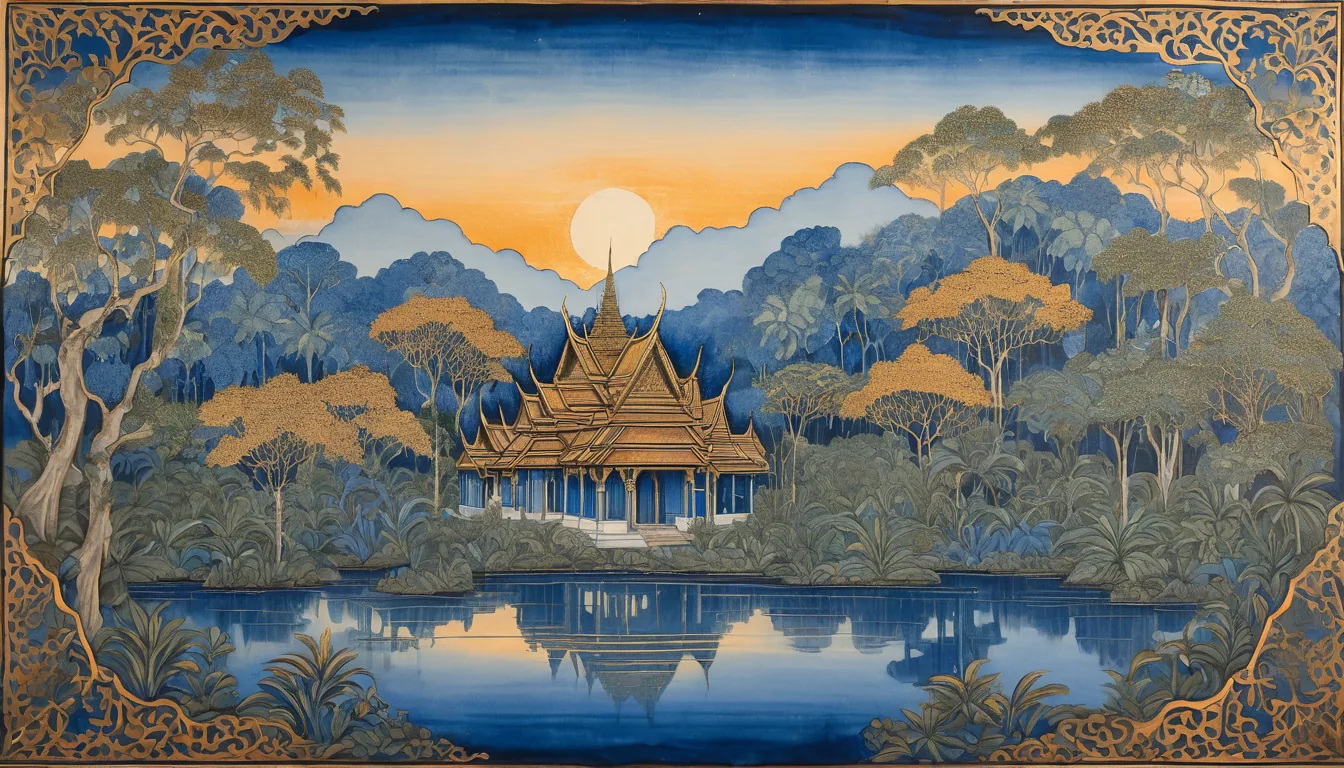
Illustration (AI-generated) of a flowering forest canopy and gilded temple eaves at dawn in traditional Thai mural style. Not a depiction of any specific piece.
Plate I:Illustration (AI-generated) of a flowering forest canopy and gilded temple eaves at dawn in traditional Thai mural style. Not a depiction of any specific piece.

In Thai Buddhist material culture and folkloric practice, the salika thai amulet (known in Thai as nok salika or sarika, นกสาลิกา / นกสาริกา) occupies a distinct place among non-anthropomorphic talismans (khrueang rang) [1][10][11]. Unlike votive tablets depicting the historical Buddha or senior monastic masters, a Salika piece typically takes the form of a single carved bird, a facing pair of birds (salika khu), a pressed herbal-powder plaque, or a miniature rolled metal scroll (takrut salika) carried in a wax case or pendant frame [10][11][15][20]. Across regional Thai lineages, the motif draws upon classical Pali and Sanskrit avian imagery, Himavanta forest cosmology, and monastic homiletic metaphors linking the mynah bird's articulate voice with agreeable speech (piyavaca) and social goodwill (metta mahaniyom) [1][7][8][16].

Understanding this class of amulet requires separating three overlapping layers: the natural and textual identity of the bird in Indic and Siamese literature, the ritual botany and metallurgy used to craft physical pieces, and the 20th- and 21st-century monastic and lay lineages documented in Thai periodicals [1][10][11][13].

Etymology, Ornithology, and Textual Roots of Nok Salika

The Thai word salika (สาลิกา or สาริกา) derives from the Pali noun sālikā (sāḷikā / sāḷiyā) and Epic Sanskrit śārikā or sārikā, denoting the mynah bird [1][2]. In the Pali Text Society's Pali-English Dictionary, sālikā is glossed as the maina bird and often paired with suka (Sanskrit śuka), the parrot, as both species imitated human speech in ancient courts [1][2][5]. In the Pali Canon, the bird appears in the Samyutta Nikaya (S i.190; Theragatha 1, 1232) and multiple Jataka stories (J i.429, J v.110, J vi.421, 425) [1]. In the Maha-Ummagga Jataka (Jataka No. 546, the Mahosadha Jataka), a palace sāḷikā bird figures in the narrative of the minister Mahosadha at Mithila under King Vedeha [3].

In Sanskrit treatises, the Carakasamhita (Sutrasthana 27) and Susrutasamhita classify śārikā among Pratuda ("pecker" birds) and Janghala (dry-forest creatures), while Hamsadeva's 13th-century Mrgapaksisastra identifies it with the hill myna (Gracula religiosa indica) [2]. Raghunatha's 17th-century Bhojanakutuhala records the belief that a captive śārikā cries out (utkrosanti) at poisoned food [2].

In Thai ornithology, nok salika refers to mynas (family Sturnidae) native to South and Southeast Asia, chiefly the common myna (Acridotheres tristis) and hill myna (Gracula religiosa, called nok khun thong in central Thai and nok iang kham in northern Thai) [4][5]. Described in 1760 by Mathurin Jacques Brisson, named Paradisea tristis by Carl Linnaeus in 1766 from Pondicherry, and placed in Acridotheres by Louis Pierre Vieillot in 1816, the common myna has a brown body, black hooded head, and yellow bill, legs, and eye-patch [4]. Common mynas pair for life, lay four to six eggs, and mimic whistles and speech [4]. Both lifelong pair-bonding and vocal mimicry inform paired nok salika amulets and the phrase salika lin thong ("golden-tongued Salika") [4][5][10][16].

Himavanta Cosmology and the Homiletic Metaphor

Thai temple muralists, poets, and carvers place the idealized Salika bird in the mythical Himavanta (Pa Himmapan, ป่าหิมพานต์) forest [6][7]. In the Sukhothai cosmological treatise Traibhumikatha (Traiphum Phra Ruang) attributed to Phaya Lithai (Phra Maha Thammaracha I) of Si Satchanalai, the cosmos comprises three planes (Kamaphumi, Rupaphumi, and Arupaphumi) [6][7]. At the foot of Mount Sumeru, Himavanta spans 3,000 yojana in area (one yojana is about 10 miles or 16 km) and 9,000 yojana in circumference, with 84,000 peaks and seven great lakes: Anotatta, Kannamunda, Rathakara, Chaddanta, Kunala, Mandakini, and Sihappapata, with Lake Anotatta ringed by five 200-yojana peaks [7]. In mural art, Himavanta birds feed on sacred fruits and fill the canopy with song [7][19].

The Salika bird is also a classical metaphor in Thai Buddhist homiletics [8]. A 2022 study in the Journal of Applied Psychology and Buddhism for Society documents the early-Rattanakosin preaching lineage at Wat Prayurawongsawas Worawihan in Thonburi called lila salika pon yuea (ลีลาสาลิกาป้อนเหยื่อ), the "Salika bird feeding its young" sermon style [8]. It compares a monk's exposition to a parent Salika bird portioning food to match what its fledgling can digest, adapting Dhamma instruction across four canonical modes (sandassana, samadapana, samuttejana, sampahamsana) and the threefold training (sila, samadhi, panna) [8].

Ritual Botany and Material Forms of a Salika Thai Amulet

When craftsmen and monastic lineages produce a physical salika thai amulet, material selection follows symbolic correspondences in Thai ethnobotany and metallurgy [9][10][19][20]. Five primary formats are documented:

1. Carved Parasitic Wood (Mai Kafak Rak)

Traditional wood-carved salika lin thong figures use kafak rak (กาฝากรัก), a parasitic mistletoe growing on a host rak shrub (Calotropis gigantea, giant milkweed) [10]. Thai ritual botany distinguishes rak son (รักซ้อน, with layered white-green blossoms) from rak la (รักลา or ton thudong, with purple blossoms) [10]. Because the Thai word rak (รัก) is homophonous with "love," the plant carries an auspicious name (nam mongkhon), though domestic custom avoids planting it inside house yards due to its irritating sap [10]. When parasitic mistletoe takes root on rak son or dark-sapped rak yai, carvers harvest the branch for Salika Lin Thong birds and Ka Chap Lak crows, while rak son roots are carved into Phra Phakawam images [10].

2. Pressed Herbal and Chalk Powders (Nuea Phong)

A second category of sarika bird amulet is pressed in moulds from sacred powders (nuea phong) [10][11]. Dried leaves and blossoms of rak son are ground into phong itthije (chalk powder made by writing and erasing Pali formulas) and phong na ok taek [10][11]. In addition, a 2021 botanical survey of the genus Kaempferia (family Zingiberaceae) in Maha Sarakham Province identified Kaempferia gilbertii W.Bull. under the vernacular name Salika Lin Thong (สาริกาลิ้นทอง), cultivated as an auspicious plant (phuet mongkhon) associated in local belief with commerce and negotiation [9]. Pressed-powder Salika plaques combine flower pollens (keson dokmai), parasitic woods, chalk powders, and beeswax (si phueng) into low-relief tablets [11].

3. Paired-Bird Plaques (Salika Khu) and Painted Reliefs

In late 20th- and early 21st-century issues, moulded plaques depicting two birds facing one another among floral scrolls (salika khu, สาริกาคู่) or flanking deva figures gained wide circulation across Thailand, Singapore, Malaysia, and Hong Kong [14][15]. These plaques are pressed from scented herbal-mineral pastes and finished in polychrome enamels or gold leaf [14][15].

4. Miniature Rolled Scrolls (Takrut Salika) and Lip-Wax Containers

In Thai amulet terminology, salika also serves as a size classifier denoting the smallest miniature grade of an object, named after the small forest bird [18][19]. A takrut salika (ตะกรุดสาลิกา) is a tiny rolled yantra scroll of gold, silver, or copper foil [16][20][21]. Such scrolls are carried inside a small round box of consecrated beeswax ointment (talap si phueng), worn on a chain, or embedded into the base or reverse of a Buddha image [16][18][20][21].

5. "Salika-Scale" Miniature Carvings and Blades (Suea Salika and Mit Akhom Salika)

Collectors also encounter the modifier Salika on non-avian talismans [18][19]. In the carved tiger-fang lineage of Luang Pho Pan (Phrakhru Phiphat Nirothakit) of Wat Mongkhon Kothawas (Wat Bang Hia) in Khlong Dan, Samut Prakan Province, a hollow tiger canine was sectioned into four or five pieces [18]. While larger sections became Suea Yai and Suea Klang, the tiny solid tip was carved into a miniature Suea Salika (เสือสาริกา), inscribed on the base with yant ko ya (na khamuat) and rue-ruea and kept in a lip-wax box [18]. Similarly, for his 62nd birthday on 17 January B.E. 2557 (2014), Phra Phiphit Phatthanathon (Luang Pho Somchai) of Wat Pariwat Ratchasongkhram in Yannawa, Bangkok, issued nine-metal Suea Salika tigers and one-inch Mit Akhom Salika ritual knives forged from Wat Pariwat alloy and Nam Phi iron by master smith Sala Buntan Sitthiphaisan of Hang Chat, Lampang [19].

Documented Monastic and Lay Lineages

Several 20th- and 21st-century masters are documented in Thai amulet journalism for their Salika creations and related rites [11][12][13][14].

Luang Pho Sanit Yassindharo of Wat Lam Bua Loi (Nakhon Nayok)

One closely studied powder issue is the Nok Salika Chap Pak Long (นกสาลิกาจับปากโลง, "Salika perching on the coffin rim") or Nok Salika Long Rang (นกสาลิกาหลงรัง) by Luang Pho Sanit Yassindharo of Wat Lam Bua Loi, Nakhon Nayok Province [11][12]. As documented by Laem Chanphisalo in Komchadluek (2016), Luang Pho Sanit compounded the batch from 108 parasitic woods (kafak 108), 108 flower pollens (keson dokmai 108), phong itthije, erased-yantra chalk powders, and beeswax, consecrating the birds inside a coffin until wild mynahs perched along the coffin rim [11]. Surviving pieces remain prized among collectors of Nakhon Nayok and Prachinburi lineages [11][12].

The Lower Isan Lineage: Ajarn Pleng Bunyuen and Luang Pho Sawat Phumisaro

In Surin, Buriram, and Ubon Ratchathani, Salika lore is transmitted as both an amulet and a gold-leaf inscription rite [13]. A 2014 Komchadluek profile by Traithep Kraingu documents Luang Pho Sawat Phumisaro of Wat Pa Saen Udom in Mueang District, Ubon Ratchathani (holder of Nak Tham Ek and Pali Parian Tham 3) [13]. In B.E. 2537 (1994), at age forty, he became the first monastic disciple to inherit the notebooks of Surin lay master Ajarn Pleng Bunyuen of Tha Tum District, while also studying under Luang Pu Rit Rattanachoto of Buriram, Pho Khru Kan, Pho Khru Thom, and Luang Pu Si [13].

This lineage divides the Salika corpus into Salika Khap Yuea (สาลิกาคาบเหยื่อ), Salika Long Rang (สาลิกาหลงรัง), and Salika Khuen Tham (สาลิกาคืนถ้ำ), alongside long na na thong gold-leaf application [13]. For disciples born on Wednesday night (Rahu day), Luang Pho Sawat chants Phra Chao Poet Lok before applying gold leaf and concludes by teaching the Five Precepts [13].

Kruba Krissana Intawanno of Samnak Song Weluwan (Nakhon Ratchasima)

Among collectors in Singapore, Malaysia, and Hong Kong, contemporary interest in the salika thai amulet was shaped by Kruba Krissana Intawanno of Samnak Song Weluwan (Ban Khlong Krathing, Tambon Thai Samakkhi, Wang Nam Khiao District, Nakhon Ratchasima) [14][15]. Reports in Komchadluek (2011) and MGR Online (2013) note that his Thep Chamlaeng Phamon and Thep Salika / Salika Khu plaques ranked him among the four most collected living Thai monks in Singapore alongside Luang Pho Koon Parisuttho, Luang Pu Hong Phrompanyo, and Luang Pho Phun [14][15].

Embedded Takrut Salika in Classic Issues

Miniature takrut salika scrolls also serve as authenticating markers inside major amulets [20][21]. Art historian Ram Watcharapradit notes that Luang Pu Tim Issariko of Wat Lahan Rai (Ban Khai District, Rayong) pressed paired takrut salika khu (ตะกรุดสาลิกาคู่) into the reverse of select first-block large-mould Phra Khun Phaen Phong Phrai Kuman tablets in mid-B.E. 2515 (1972) [21]. On 7 November B.E. 2556 (2013), Luang Pho Ruay Pasathiko of Wat Tako (Phachi District, Ayutthaya) consecrated 2,881 Luang Pu Thuat Phim Poet Lok images for his 92nd birthday (72nd vassa), embedding gold takrut salika into 100 silver pieces and silver takrut salika into 2,781 nawaloha pieces [20].

Sacred Tattoos, Chants (Katha), and Ethical Precepts

In the Thai sacred tattoo (sak yant) tradition, the motif is known as Yant Maha Sane Salika (ยันต์มหาเสน่ห์สาลิกา) [17]. A 2021 Thairath study of the Wat Bang Phra lineage in Nakhon Chai Si District, Nakhon Pathom Province, associated with Luang Pho Poen Thitakuno (born 12 August B.E. 2466 / 1923, disciple of Phra Ajarn Him Inthachoto), notes that the yantra is tattooed either with dark ink or invisibly with consecrated sesame oil (sak nam man) [17]. Bearers of Yant Salika in this lineage observe four behavioural prohibitions (kho ham): abstaining from divisive speech (wacha so siat) that causes quarrels; never spitting on the ground out of respect for the earth deity Phra Mae Thorani; never reviling one's parents; and never disrespecting the teacher [17].

For devotional recollection after chanting "Namo Tassa" three times, a 2025 Thairath compendium records four traditional Katha Salika Lin Thong stanzas [16]:

  • Five Buddhas Heart-Syllable Version: "Puttang rakkhayetang, Thammang rakkhayetang, Sangkhang rakkhayetang, Ma Ka A Pi" (repeating "Ma Ka A Pi" nine times) [16].
  • Na Salika Lin Thong Version (recited five times over small takrut or lip balm): "Nga Na Na Ma", followed by "Om Phiang Sathu Sathu Sathu" [16].
  • Luang Pho Kuay Chutinataro (Wat Khositaram) Version: "Phuttho ruam chit, Thammo ruam chai, Sangkho long lai, ruam chai Phra Phuttho" [16].
  • Luang Pu Sila Sirichanto Version: "Imang sacca-vacang adhitthami, Dutiyampi imang sacca-vacang adhitthami, Tatiyampi imang sacca-vacang adhitthami" ("I resolve upon this utterance of truth") [16].

This pairing of folk heart-syllables with the canonical vow of truthful speech (sacca-vaca) reflects how monastic teachers anchor the salika thai amulet tradition in Buddhist verbal ethics [8][16][17].


Where to see pieces like this - Our sister shop, Shogun X Amulets, has a page on Salika amulets: https://shogunxamulets.com/?s=Salika&post_type=product. Disclosure: Shogun X Amulets and ThaiAmuletExchange.com are run by the same group.

Reference Q&A · Direct Answer Capsules

Common Questions

Q01

What does Nok Salika mean in Thai amulet tradition?

In Thai Buddhist and folkloric usage, *nok salika* (นกสาลิกา or นกสาริกา) refers to the mynah bird, deriving from the Pali word *sālikā* and Sanskrit *śārikā* [1][2]. Natural mynahs (*Acridotheres tristis* and *Gracula religiosa*) are native across Thailand and are noted for pairing for life and mimicking human speech [4][5]. In amulet culture, the bird symbolizes articulate, gentle communication (*piyavaca*) and cordial interpersonal relations, appearing as carved wood or stone birds, pressed herbal-powder plaques, and sacred tattoos [10][11][17].

Q02

What does the phrase Salika Lin Thong refer to?

*Salika Lin Thong* (สาลิกาลิ้นทอง or สาริกาลิ้นทอง) literally translates as "golden-tongued Salika" [9][10][16]. In Thai ritual culture, the term applies to three related things: miniature bird amulets carved from parasitic mistletoe wood (*kafak rak*) or pressed from sacred powders [10][11]; a set of short devotional chants (*Katha Salika Lin Thong*) recited before negotiations or public speaking [16]; and a species of ginger-family plant (*Kaempferia gilbertii* W.Bull.) cultivated in Thailand as an auspicious household ornamental [9].

Q03

Why are Salika bird amulets often carved from rak wood mistletoe?

Traditional carvers favour *kafak rak* (กาฝากรัก), a parasitic mistletoe that grows on the branches of the *rak* shrub (*Calotropis gigantea*, especially the double-flowered *rak son* variety), because the Thai word *rak* is a homophone for "love" or "affection" [10]. In Thai ritual botany, a parasitic plant drawing life from a *rak* host is regarded as concentrating the auspicious name-value of the tree, making its dense wood a preferred medium for carving *Salika Lin Thong* figures [10].

Q04

What is the difference between a single Salika and a Salika Khu amulet?

A single Salika amulet depicts one bird, such as the coffin-rim consecrated *Nok Salika Chap Pak Long* powder figures of Luang Pho Sanit at Wat Lam Bua Loi, and is traditionally associated in folk belief with persuasive speech and public communication [11][16]. A *Salika Khu* (สาริกาคู่) depicts two birds facing or flanking each other, reflecting the natural lifelong pair-bonding of mynah birds and symbolizing mutual harmony in partnerships or household life [4][15].

Q05

Why are some tiger carvings and ritual knives called Salika?

In Thai collector terminology, the word *salika* also serves as a size classification meaning "miniature," by analogy with the small forest bird [18][19]. When a hollow tiger fang in the Wat Bang Hia lineage of Luang Pho Pan was cut into sections, the smallest solid tip carving was named *Suea Salika* ("Salika-sized tiger") and kept inside a lip-wax box [18]. Likewise, one-inch miniature ritual knives are termed *Mit Akhom Salika*, and tiny rolled foil scrolls are called *Takrut Salika* [19][20].

Q06

Which Thai masters are documented for creating Salika amulets?

Several masters are well documented in Thai periodical literature for Salika issues [11][13][14]. In Nakhon Nayok, Luang Pho Sanit Yassindharo of Wat Lam Bua Loi created pressed-powder *Nok Salika Long Rang* figures from 108 parasitic woods and 108 pollens [11][12]. In Nakhon Ratchasima, Kruba Krissana Intawanno of Samnak Song Weluwan became internationally known for polychrome *Thep Salika* plaques [14][15]. In lower Isan, Ajarn Pleng Bunyuen of Surin and his monastic disciple Luang Pho Sawat Phumisaro of Wat Pa Saen Udom in Ubon Ratchathani transmitted the *Salika Khap Yuea* and *Salika Long Rang* rites [13].

Q07

What behavioural rules apply to bearers of Salika amulets and tattoos?

Monastic and *sak yant* lineages link the Salika motif directly to ethical speech under the Buddhist precepts [13][17]. In the Wat Bang Phra tattoo lineage associated with Luang Pho Poen Thitakuno, bearers of *Yant Maha Sane Salika* observe four traditional prohibitions (*kho ham*): abstaining from divisive or slanderous speech that causes quarrels, refraining from spitting on the ground out of respect for Phra Mae Thorani, never reviling one's parents, and never disrespecting one's teacher [17].

Verified Sources (21)

  1. Pali Text Society, *The Pali Text Society's Pali-English Dictionary* (entry "Sālikā / Sāḷikā", pp. 706-707), Digital Dictionaries of South Asia, University of Chicago — Pali etymology of *sālikā* / *sāḷikā* / *sāḷiyā* as the maina (mynah) bird, pairing with *suka* (parrot), and canonical citations in *Samyutta Nikaya* (S i.190 = Th 1, 1232) and *Jataka* (J i.429; v.110; vi.421, 425).
  2. Wisdom Library, "Sharika, Śārikā, Sārikā: 21 definitions", 2024 — Sanskrit *śārikā* / *sārikā* definitions as mynah (*Acridotheres* sp.) and hill myna (*Gracula religiosa indica* in *Mrgapaksisastra*), classification under *Pratuda* and *Janghala* in *Carakasamhita* (Sutrasthana 27) and *Susrutasamhita*, and the *Bhojanakutuhala* reference to crying out at poisoned food.
  3. Robert Chalmers (trans.), *The Jataka, Vol. VI, No. 546: The Maha-Ummagga-Jataka (Mahosadha Jataka)*, Cambridge University Press, 1895 (online edition at Wisdom Library — canonical appearance of the *sāḷikā* bird in the palace narrative of the sage Mahosadha at Mithila under King Vedeha.
  4. Wikipedia, "Common myna", 2026 — ornithological taxonomy of *Acridotheres tristis* (family Sturnidae, described by Brisson 1760, Linnaeus 1766 *Paradisea tristis* from Pondicherry, Vieillot 1816 genus *Acridotheres*), physical traits, lifelong pair-bonding, 4-6 egg clutch, vocal mimicry, and native range across Thailand.
  5. Thai Wikipedia, "นกขุนทอง (Gracula religiosa)", 2026 — hill myna (*Gracula religiosa*, northern Thai *nok iang kham*) in family Sturnidae, 8 subspecies in South and Southeast Asia, and reputation for mimicking human speech alongside parrots.
  6. Wikipedia, "Himavanta", 2026 — Himavanta (*Himmapan*) forest in the *Traibhumikatha* (*Traiphum Phra Ruang*) composed by Phaya Lithai (Phra Maha Thammaracha I) of Si Satchanalai, structured into three planes (*Kamaphumi*, *Rupaphumi*, *Arupaphumi*) and eight chapters.
  7. Thai Wikipedia, "ป่าหิมพานต์", 2026 — cosmological dimensions of Himavanta at the base of Mount Sumeru (3,000 *yojana* area, 9,000 *yojana* circumference, 1 *yojana* = 10 miles / 16 km, 84,000 peaks, 7 great lakes including Lake Anotatta surrounded by five 200-*yojana* peaks).
  8. Phrakhru Sophonpariyatyanukit (Songdi), Suwatsan Rakkhanto, and Chen Nakhon, "แนวทางการเทศนาสาลิกาป้อนเหยื่อวัดประยุรวงศาวาส (Guidelines for Salika Feeding Its Young Preaching Style at Wat Prayurawongsawas)", *Journal of Applied Psychology and Buddhism for Society*, Vol. 8 No. 1, pp. 355-370, 2022 — the early-Rattanakosin *lila salika pon yuea* homiletic tradition at Wat Prayurawongsawas, the metaphor of a parent Salika bird feeding its young in digestible portions, the four teaching modes (*sandassana*, *samadapana*, *samuttejana*, *sampahamsana*), and the threefold training (*sila*, *samadhi*, *panna*).
  9. Surapon Saensouk, Piyaporn Saensouk, and Areerat Raksasin, "ความหลากหลายและการใช้ประโยชน์ของพืชสกุลตูบหมูบ (วงศ์ขิง) ในจังหวัดมหาสารคาม (Diversity and Utilization of Genus Kaempferia in Maha Sarakham Province)", *Journal of Agriculture and Technology RMUTI*, Vol. 2 No. 1, pp. 9-16, 2021 — botanical identification of *Kaempferia gilbertii* W.Bull. (family Zingiberaceae) under the Thai vernacular name *Salika Lin Thong* (สาริกาลิ้นทอง) as an auspicious ornamental plant (*phuet mongkhon*).
  10. Komchadluek Online, "ความเชื่อ เกี่ยวกับพรรณไม้ 'ต้นรัก' นามมงคลแต่ห้ามปลูกในบ้าน", 6 September 2023 — botanical distinction between *rak son* (white-green layered flowers) and *rak la* (purple flowers) of *Calotropis gigantea*, use of parasitic mistletoe (*kafak rak*) on *rak son* or *rak yai* to carve *Salika Lin Thong* and *Ka Chap Lak* amulets, use of *rak son* roots for *Phra Phakawam*, and use of leaves and flowers in *phong itthije* and *phong na ok taek* powders.
  11. Laem Chanphisalo, "คมเลนส์ส่องพระประจำวันที่ 9 เม.ย. 2559", *Komchadluek*, 9 April 2016 — Luang Pho Sanit Yassindharo of Wat Lam Bua Loi (Nakhon Nayok) creating powder *Nok Salika Chap Pak Long* / *Nok Salika Long Rang* from 108 parasitic woods (*kafak 108*), 108 flower pollens (*keson dokmai 108*), *phong itthije*, erased-yantra chalk powders, and beeswax, consecrated inside a coffin until wild mynah birds perched on the coffin rim.
  12. Daily News Online, "คนรักพระ : ขรก.อารมณ์ดี 'ทชานน ศิลุจจัย' ศรัทธาพระนครนายก-ปราจีนบุรี", 2025 — collector standing of *Nok Salika Long Rang* by Luang Pho Sanit of Wat Lam Bua Loi, Nakhon Nayok Province, among specialists in Nakhon Nayok and Prachinburi monastic lineages.
  13. Traithep Kraingu, "หลวงพ่อสวัสดิ์ ภูมิสาโร พระผู้สืบทอดวิชาลงนะหน้าทอง อ.เปล่ง บุญยืน", *Komchadluek*, 23 December 2014 — Luang Pho Sawat Phumisaro of Wat Pa Saen Udom (Ubon Ratchathani, Nak Tham Ek and Parian Tham 3) becoming the first monastic disciple of Surin lay master Ajarn Pleng Bunyuen (Tha Tum District, Surin) in B.E. 2537 (1994) at age 40, studying under Luang Pu Rit Rattanachoto (Buriram), and practicing *Salika Khap Yuea*, *Salika Long Rang*, *Salika Khuen Tham*, and *Na Na Thong* with *Phra Chao Poet Lok* for Wednesday-night births and Five Precepts instruction.
  14. Traithep Kraingu, "ตัน ฉี่กวง ผู้สร้างมาตรฐานพระแท้ที่...'สิงคโปร์'", *Komchadluek*, 20 December 2011 — Kruba Krissana Intawanno of Samnak Song Weluwan (Ban Khlong Krathing, Tambon Thai Samakkhi, Wang Nam Khiao District, Nakhon Ratchasima) creating *Thep Chamlaeng Phamon* and *Thep Salika* amulets and ranking among the top four contemporary Thai monks collected in Singapore.
  15. MGR Online, "ไสยศาสตร์ความเชื่อไทยกับดาราฮ่องกง", 18 March 2013 — popularity of Kruba Krissana Intawanno's paired Salika (*Salika Khu*, สาริกาคู่) plaques among Hong Kong and Chinese collectors.
  16. Thairath Online, "คาถาสาลิกาลิ้นทอง เพิ่มเสน่ห์การเจรจา ค้าขายคล่อง คนเมตตาเอ็นดู", 7 November 2025 — four specific *Katha Salika Lin Thong* chant texts: the Five Buddhas *"Ma Ka A Pi"* (9 times), *Na Salika Lin Thong* *"Nga Na Na Ma"* (5 times) for small *takrut* or lip balm, Luang Pho Kuay Chutinataro of Wat Khositaram's version, and Luang Pu Sila Sirichanto's *"Imang sacca-vacang adhitthami"* version.
  17. Thairath Online, "ความหมายพุทธคุณของยันต์มหาเสน่ห์สาลิกา พร้อมข้อห้ามของผู้บูชา", 30 April 2021 — *Yant Maha Sane Salika* tattoo tradition associated with Luang Pho Poen Thitakuno (born 12 August B.E. 2466 / 1923, disciple of Phra Ajarn Him Inthachoto at Wat Bang Phra, Nakhon Pathom), ink and sesame-oil tattooing, and four behavioural prohibitions (*kho ham*): no divisive speech, no spitting on the ground (disrespect to Phra Mae Thorani), no reviling parents, and no disrespecting the master.
  18. Traithep Kraingu, "เสือหลวงพ่อปาน วัดบางเหี้ย ที่สุดแห่งเสือ 'เมตตา มหาอำนาจ'", *Komchadluek*, 18 April 2016 — use of the term *Salika* as a miniature size grade in *Suea Salika* (carved from the small tip of a sectioned tiger canine in the lineage of Luang Pho Pan, Wat Mongkhon Kothawas / Wat Bang Hia, Samut Prakan, inscribed with *yant ko ya* and *rue-ruea* and kept in a lip-wax box).
  19. Komchadluek Online, "'สวดมนต์-อาบน้ำมนต์ข้ามปี' รับปีใหม่มะแม(แพะ)ที่วัดปริวาส", 25 December 2014 — Phra Phiphit Phatthanathon (Luang Pho Somchai) of Wat Pariwat Ratchasongkhram (Yannawa, Bangkok) issuing 9-metal *Suea Salika* and 1-inch *Mit Akhom Salika* ritual knives (forged by Sala Buntan Sitthiphaisan of Hang Chat, Lampang) for his 62nd birthday on 17 January B.E. 2557 (2014), comparing the miniature *Salika* scale to the small forest Salika bird.
  20. Traithep Kraingu, "หลวงปู่ทวดเปิดโลกรุ่นแรกหลวงพ่อรวย", *Komchadluek*, 9 December 2013 — Luang Pho Ruay Pasathiko of Wat Tako (Phachi District, Ayutthaya) consecrating 2,881 *Luang Pu Thuat Phim Poet Lok* images on 7 November B.E. 2556 (2013) for his 92nd birthday (72nd *vassa*), with gold *Takrut Salika* embedded in 100 silver pieces and silver *Takrut Salika* embedded in 2,781 *nawaloha* pieces.
  21. Traithep Kraingu, "พระผงพรายกุมารหลวงปู่ทิมสุดยอดมวลสาร", *Komchadluek*, 12 February 2013 — Ram Watcharapradit's documentation of paired miniature *Takrut Salika Khu* (ตะกรุดสาลิกาคู่) embedded into the reverse of first-block large-mould *Phra Khun Phaen Phong Phrai Kuman* tablets created by Luang Pu Tim Issariko of Wat Lahan Rai (Rayong) in mid-B.E. 2515 (1972).
Cross-Referenced Dossiers

How this article was checked

Each factual statement was traced to one of the independent sources above before publication: 28 statements checked. 1claims from the topic's starting material could not be verified and were left out, and 1 claims that an object brings luck, protection or other outcomes were removed — this encyclopedia describes objects, not outcomes.