
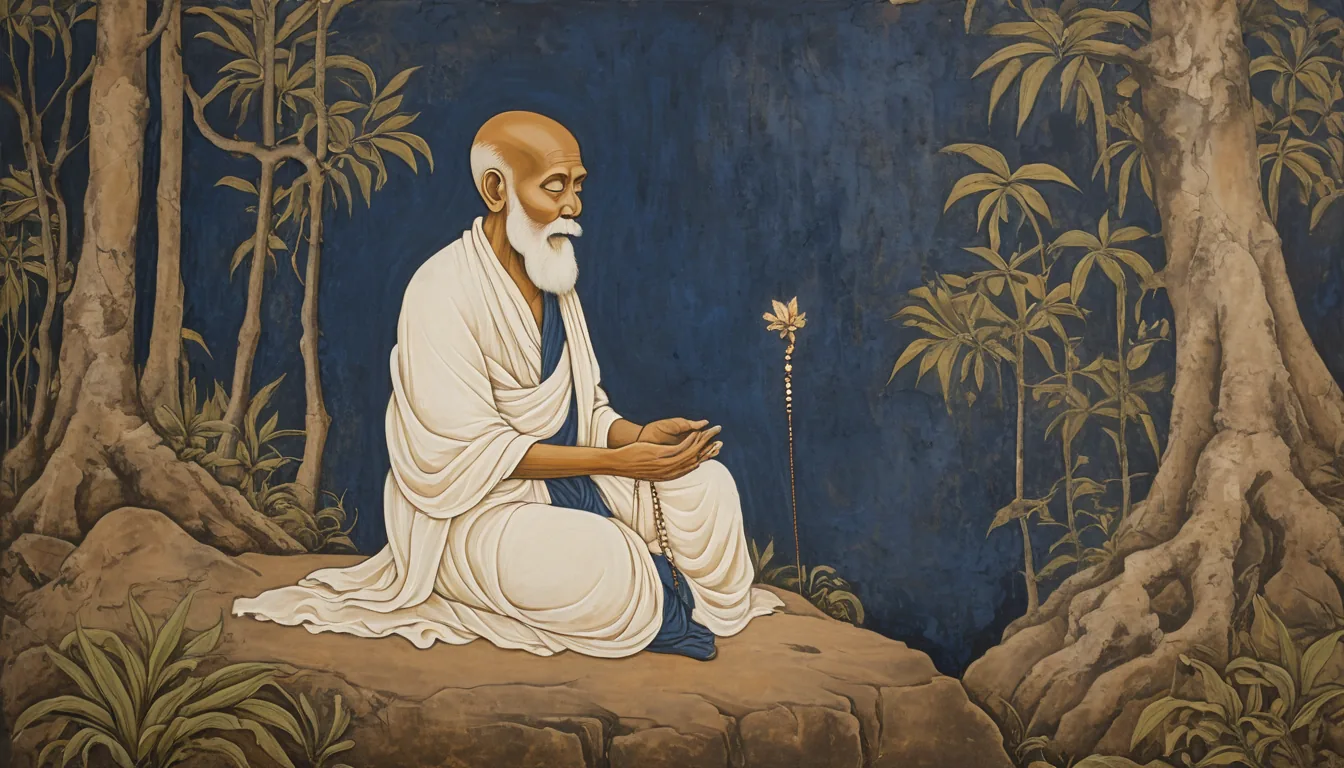
A Lersi (Thai ฤๅษี, also romanised Ruesi or Reusi) is a hermit sage: the Thai and Southeast Asian counterpart of the Indian rishi, an ascetic who left household life to live in forests, mountains or caves [1], [2]. In Thai culture the figure appears in temple statuary, in the ceremonies of the performing arts and in Thai traditional medicine, where the physician Jivaka Komarabhacca is honoured in hermit form [4], [7], [9].
Key facts
| Fact | Detail | Source |
|---|---|---|
| Thai term | ฤๅษี / ฤษี, from Sanskrit ṛṣi, "composer of the Vedas" or "seer" | [2] |
| Pali equivalent | Isi | [1] |
| Physician honoured in hermit form | Jivaka Komarabhacca, physician to King Bimbisara and the Buddha | [3], [4], [5] |
| Canonical title of Jivaka | Foremost of lay followers with confidence in an individual (AN 1.256) | [3] |
| Wat Pho hermit statues | 80 postures cast under Rama III in zinc and tin; 24 remain at the temple | [7] |
| Hermit head in the arts | Head of Phra Bharata Rishi (พระภรตฤษี) worn by the presiding teacher at the khrop rite | [9] |
The word and its origins
Thai Wikipedia gives the word as ฤๅษี or ฤษี, from the Sanskrit ṛṣi, glossed as "one who composed the Vedas" or "one who sees". The feminine form is ฤษิณี [2]. It describes the ṛṣi as a kind of ascetic who existed before the Buddha's time and renounced household life for solitude in forests, mountains or caves [2]. In Pali the same word appears as isi. There it can refer to a Buddha, a Paccekabuddha, an arahant or a senior monk [1].
English Wikipedia notes that veneration of Ruesi is notable in Southeast Asian Buddhism. It names the sage Agastya, known in Thailand as Phra Reusi Akkhot, as an important example [1]. The word is also embedded in the Thai alphabet: the consonant ษ is named so reu-si (ษ ฤๅษี) [1].
Jivaka Komarabhacca: the physician sage
A figure linked to the Lersi in Thai medicine is Jivaka Komarabhacca (ชีวกโกมารภัจจ์), called "Mo Chiwok" (หมอชีวก, "Doctor Jivaka") [4]. In Thai news coverage he also appears with the honorific "Pu" (ปู่, grandfather) as "Pu Ruesi Chiwok Komarabhacca" (ปู่ฤาษีชีวก โกมารภัจจ์) [8].
The early record. Jivaka was a physician in Rājagaha (modern Rajgir). He served King Bimbisāra, the Buddha and later King Ajātasattu [4], [5]. The oldest account of his life is in the Pali Vinaya [4], [5]. A Matichon column summarises the traditional story [6]:
- His mother, Salawati, was the chief courtesan of Rājagaha, and he was abandoned at birth.
- Prince Abhaya, Bimbisāra's son, found and adopted him. "Jivaka" is explained as "one who is still alive", and "Komarabhacca" as "raised by a prince".
- He studied medicine at Takkasilā (Taxila) for seven years [4], [6].
- After treating Bimbisāra, he was appointed royal physician. He also treated the Buddha's foot after Devadatta's attack [6].
The same column describes Jivaka as a lay disciple (อุบาสก) [6]. In the Aṅguttara Nikāya the Buddha names him foremost among lay followers "who have confidence in an individual" (AN 1.256) [3]. Scholars cited by Thai Wikipedia, including Zysk and Salguero, argue that no version of his biography preserves an original account [4].
In Thailand. Thai Wikipedia says Indians and Thais honour Jivaka as a patron of traditional medicine. It adds that he has a leading role in rituals connected with Thai traditional medicine [4]. English Wikipedia reports that Thai people regard him as the originator of Thai massage and medicine, and that stories tell of his supposed travels to Thailand [5]. These are statements about tradition and reverence, not historical findings. This entry makes no claim about any healing effect.
Images of the Lersi
Jivaka in hermit form. The sources present Jivaka as a lay physician and lay follower, not as an ascetic [3], [6]. Thai images, however, show him as a hermit. Thai Wikipedia describes the Thai-style image as having a white beard, white clothing and a string of prayer beads [4]. It illustrates a statue captioned "Phra Ruesi Chiwok Komarabhacca" (พระฤๅษีชีวกโกมารภัจจ์) near the ordination hall of Wat Phra Si Rattana Satsadaram [4].
The Wat Pho hermit statues (Ruesi Dat Ton). Wat Phra Chetuphon (Wat Pho) in Bangkok holds a group of Lersi statues. They show hermits in exercise postures, known as ruesi dat ton (ฤๅษีดัดตน, "hermits stretching the body"). Thai Wikipedia records this history [7]:
- Rama I had hermit statues made in various postures; how many is not known.
- Rama III had 80 postures cast in zinc (สังกะสี) and tin (ดีบุก) instead of clay, a material that deteriorates easily.
- A verse in khlong si suphap metre was composed for each posture.
- Some statues were later moved or illegally sold, and only 24 postures remain at the temple.
English Wikipedia places a "Contorting Hermit Hill" among the temple's 24 small rock gardens (khao mo). It contains statues showing massage methods and yoga positions [10].
The temple also holds Rama III-era inscriptions. UNESCO's Memory of the World register lists the Epigraphic Archives of Wat Pho: 1,431 stone inscriptions made between 1831 and 1841 under Rama III, inscribed on the register in 2011 [11]. Thai Wikipedia notes that the inscriptions include Thai traditional medicine among their subjects [7].
The hermit head in the performing arts
The Lersi is also an object of ceremony in Thai classical dance and khon masked drama. An article on ThaiJO by Pravit Rittibul and Manoch Boontonglek (2023) describes the royal-style wai khru (teacher-honouring) ceremony for khon and lakhon [9]. At the khrop (ครอบ) stage, the presiding teacher brings out the heads (ศีรษะ) of three teachers: Phra Bharata Rishi (พระภรตฤษี), Phra Phirap (พระพิราพ) and the soet crown of nora dance [9].
The article explains that Phra Bharata Rishi is regarded as the first teacher. In this account he memorised the dance of Shiva, passed it to humankind and composed the treatise on dramaturgy (นาฏยศาสตร์) [9]. The presiding teacher puts on the hermit head and carries a staff to dance the Samoe Thoen (เสมอเถร) melody. The teacher then places the heads on each pupil's head. This marks the pupil's acceptance into the art [9]. "Phra Khru Ruesi" (พระครูฤษี) also appears among the heads the article lists for the ceremony [9].
Where to see pieces like this — Our sister shop, Shogun X Amulets, has a page on Lersi (Thai hermit sages): https://shogunxamulets.com/?s=Lersi&post_type=product. Disclosure: Shogun X Amulets and ThaiAmuletExchange.com are run by the same group.