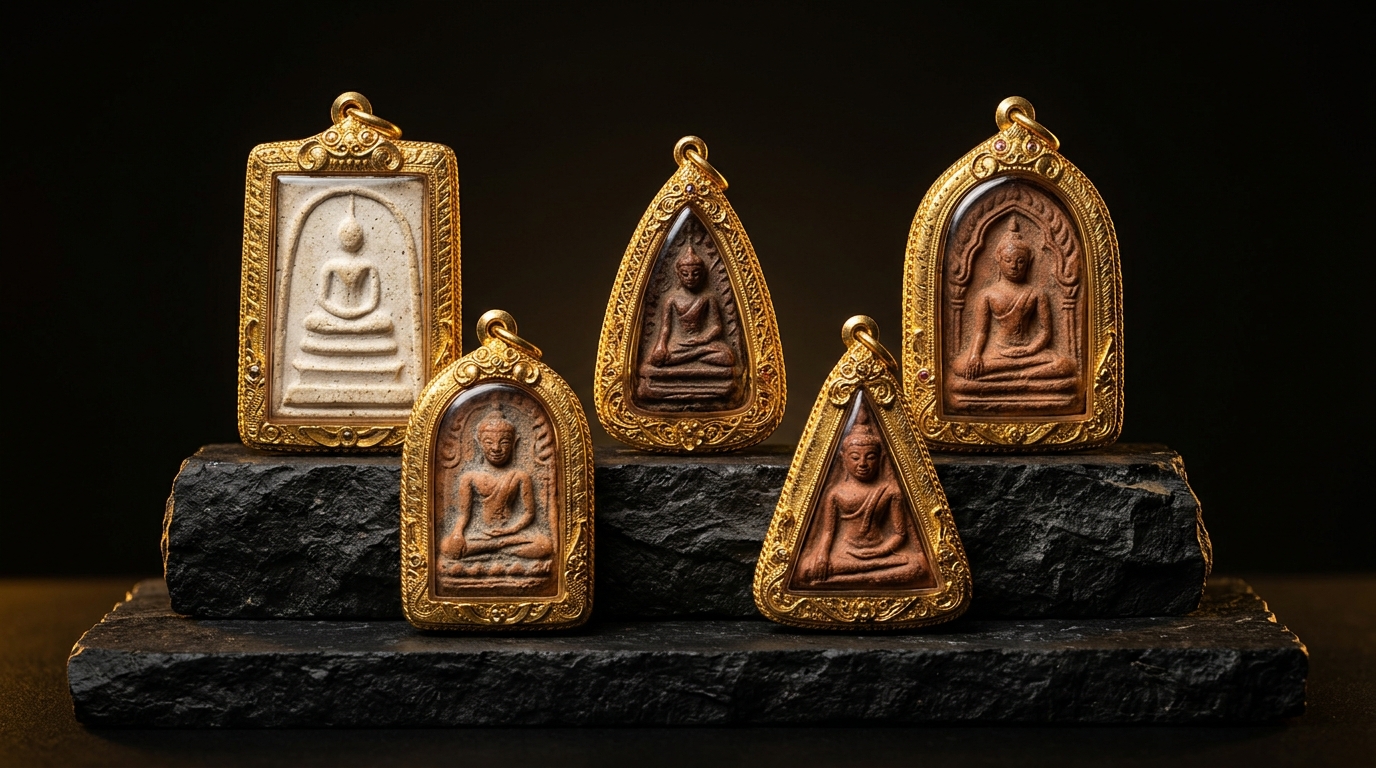
Chronological History & Archaeology of Thai Votive Tablets (Phra Phim to Phra Kreuang)
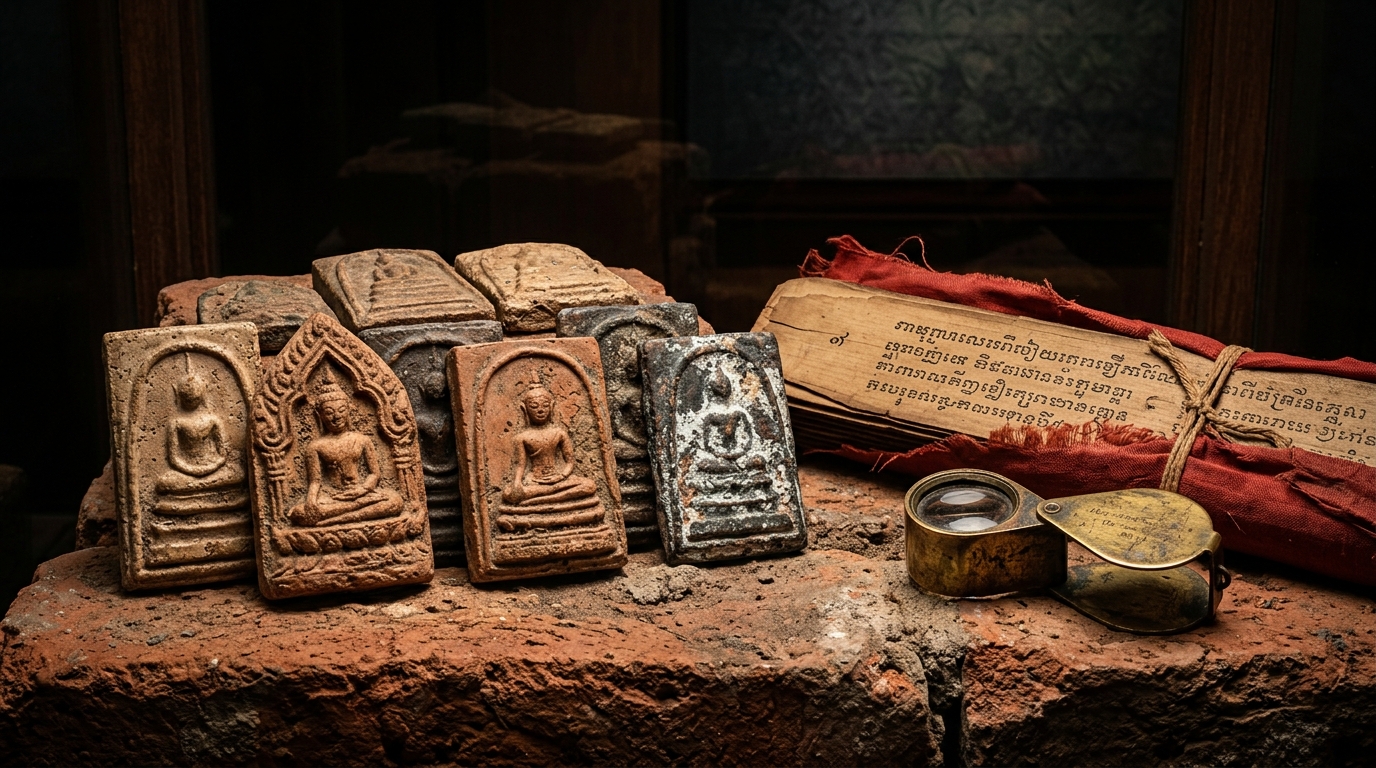
From 6th-century Dvaravati terracotta pilgrim tokens and Hariphunchai crypts to the BE 1967 Wat Ratchaburana Ayutthaya warrior vaults and Somdej Toh's Rattanakosin chalk tablets.
1. Dvaravati, Srivijaya & Hariphunchai Origins (6th–13th Century CE)
The earliest votive tablets in Thailand—known archaeologically as Phra Phim (พระพิมพ์)—were not worn around the neck.
Modeled on Indian Gupta and Pala terracotta pilgrim tokens from Bodh Gaya and Nalanda, they were stamped from riverine clay or sun-baked ash and deposited inside brick stupas (Chedis) or limestone caves to ensure the continuation of the Buddhist Sasana into future millennia.
In the northern Mon kingdom of Hariphunchai (modern Lamphun), artisans refined alluvial clay through fine cloth and fired it at high kiln temperatures, producing miniature masterpieces such as Phra Rod of Wat Mahawan and Phra Kong.
2. Lopburi, Sukhothai & Ayutthaya Warrior Crypts (10th–18th Century CE)
During the Lopburi (Khmer Bayon) and Sukhothai periods, metallurgy advanced into cast lead-tin-mercury alloys (Nuea Chin Ngern and Nuea Chin Takua).
By the U-Thong and Ayutthaya eras, votive tablets transitioned from purely commemorative stupa deposits (Phra Kru) into portable objects distributed to soldiers prior to military campaigns.
In BE 1967 (1424 CE), King Borommarachathirat II (Chao Sam Phraya) sealed the three-level underground crypt of Wat Ratchaburana in Ayutthaya containing royal gold regalia and over 100,000 lead-tin and terracotta tablets.
3. The Rattanakosin Revolution: Somdej Toh & The Era of Struck Medallions
Between BE 2409 and BE 2415 (1866–1872 CE), Somdej Phra Buddhacharn (Toh Phromrangsi) of Wat Rakhang Kositaram transformed Thai amulet culture by compounding the Five Sacred Chalk Powders (Phong Wised) into hand-pressed rectangular tablets distributed directly to lay devotees.
Three decades later, European hydraulic coin presses introduced struck metal medallions (Rian), beginning with Rian Phra Phuttha Chinnasee (BE 2440) and the first monastic portrait medallions (Rian Phra Geji) in BE 2458–2460.
4. Stratigraphy of Stupa Crypts (Phra Kru) & Chemical Weathering
5. Transition from Royal Court Artisans (Chang Luang) to Provincial Folk Workshops (Chang Ratsadon)
| Archaeological Era | Date Range (BE / CE) | Representative Sites | Primary Materials (Nuea) | Canonical Archetypes |
|---|---|---|---|---|
| Dvaravati | BE 1100–1600 (6th–11th c.) | Nakhon Pathom, Nadun | Terracotta clay + rice husks | Phra Phim Dvaravati |
| Hariphunchai (Early Lanna) | BE 1200–1800 (7th–13th c.) | Wat Mahawan (Lamphun) | Ultra-fine kiln-fired clay | Phra Rod, Phra Kong, Phra Perm |
| Lopburi (Khmer Bayon) | BE 1500–1850 (10th–13th c.) | Lopburi, Suphan Buri | Chin Ngern, Chin Takua, Samrit | Phra Hu Yan, Phra Ruang Rang Puen |
| Sukhothai / Kamphaeng Phet | BE 1800–2000 (13th–15th c.) | Thung Setthi (Kamphaeng Phet) | Fine herbal clay, Chin Ngern | Phra Sumkor, Phra Leela Med Khanun |
| U-Thong / Ayutthaya | BE 1893–2310 (1350–1767) | Wat Ratchaburana, Suphan Buri | Baked clay, Chin Ngern, glazed ceramic | Phra Phong Suphan, Phra Nang Phaya, Khun Phaen |
| Rattanakosin (Modern) | BE 2325–Present (1782–Now) | Wat Rakhang, Wat Suthat, Wat Chang Hai | Phong Putthakun, Nawa Loha, Copper/Silver Rian | Phra Somdej, Phra Kring, Rian Phra Geji |