
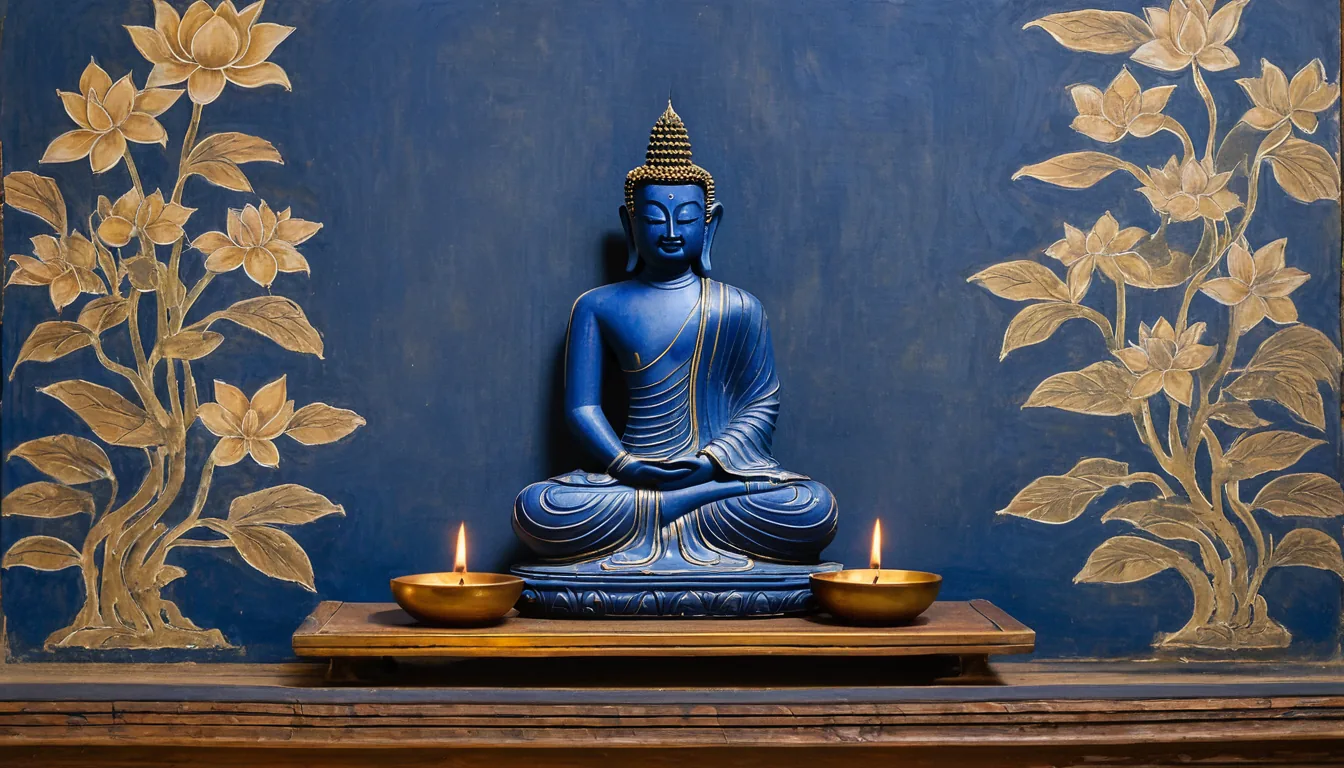
Phra Kring is a category of small cast-metal seated Buddha images that are hollow inside and contain a loose metal pellet (met kring) that produces a soft ringing or rattling sound when shaken [1][2]. In Thai Buddhist art and amulet scholarship, the form is identified with Bhaisajyaguru (Bhaisajyaguru Vaiduryaprabha Tathagata), the Medicine Buddha of the Mahayana tradition [4][6][8]. Alongside its smaller solid-cast companion image, Phra Chaiwat, the Phra Kring sits at the center of Thailand's ritual bronze-casting heritage, most famously codified at Wat Bowonniwet Vihara and Wat Suthat Thepwararam in Bangkok during the nineteenth and twentieth centuries [1][3][10].
Unlike pressed clay or powder amulets (phra phong) and machine-struck monastic coins (rian), classical Phra Kring images are produced through lost-wax investment casting (lo boran) using multi-metal alloys known as nawaloha (nine sacred metals) or sattaloha (seven metals) [1][10][12]. This article examines what defines a Phra Kring, the explanations behind the word kring, the scriptural and historical link to Bhaisajyaguru, the classification of foreign (kring nok) and domestic (kring nai) lineages, the Wat Suthat casting formula of Somdet Phra Ariyavongsagatayana (Pae Tisadevo), and how collectors evaluate authentic metallurgy and construction.
What Is a Phra Kring?
In Thai usage, the noun kring refers to a small spherical rattle enclosed within a chamber so that it emits an audible chime when moved [1][2]. A Phra Kring is therefore a miniature cast-metal Buddha image whose interior cavity houses at least one loose metal bead (met kring) [1][2]. According to a 2020 study by Surawut Saengmano in the MBU LNC Journal, ritual manuals specify that the internal pellet is cast from consecrated alloy and inscribed with sacred syllables before being sealed inside the image [2].
Two distinct explanations of the name Phra Kring appear in Thai historical literature:
- Acoustic description: Most art historians and trade writers explain that the image is named after the ringing sound (siang kring) made by the internal pellet when a devotee holds the image during prayer or submerges it in a vessel to prepare lustral water (nam mon) [1][2].
- Pali etymological tradition at Wat Suthat: Former monk Nirand Daengwijit (known as Ajarn Nu), a monastic nephew and foundry assistant at Wat Suthat, recorded an oral explanation by Somdet Phra Sangkharat (Pae Tisadevo) [3]. When asked what kring meant, the Supreme Patriarch traced the word to the Pali phrase "Kim kusalo" ("What wholesome state is this?"), referring to the mental stillness of a meditator reaching fourth-jhana equanimity (anenja or nibbuti) [3].
Iconographically, a classic Phra Kring depicts the Buddha seated in the lotus posture (padmasana) atop a double-tiered lotus throne (bua khwam bua ngai) [1][8][10]. The right hand rests over the knee in the earth-touching or subduing-Mara gesture (bhumisparsa mudra or pang man wichai), while the left hand rests in the lap holding a small medicine vessel, gourd, or myrobalan fruit [6][7][8].
The Link to Bhaisajyaguru (Medicine Buddha)
Both royal historiography and monastic manuals identify the Phra Kring image with Bhaisajyaguru, the Buddha of healing and medicine in Mahayana and Vajrayana Buddhism [2][4][8]. In Tamnan Phra Phutthachedi (Chronicle of Buddhist Monuments, pages 50 to 51), Prince Damrong Rajanubhab wrote that every Phra Kring image was originally cast as a representation of Phra Bhaisajyaguru inside Mahayana ritual practice [8]. The Thai Buddhist scholar Sathian Phothinantha likewise documented that the prototype of the Phra Kring derived from the Mahayana cult of Bhaisajyaguru Vaiduryaprabha Tathagata, whose Sanskrit title translates as the "Master of Remedies and Tathagata of Lapis Lazuli Radiance" [4][5][6].
Scriptural Foundations and the Twelve Vows
In Mahayana literature, Bhaisajyaguru is the central figure of the Bhaisajyaguru-vaidurya-prabha-raja Sutra (the Medicine Buddha Sutra) [5][6][7]. Surviving Sanskrit manuscripts discovered at Gilgit in Pakistan and in Nepal attest to the antiquity of the text [5]. Four Chinese translations survive in the Buddhist canon: an early version attributed to Srimitra in the fourth century CE (or Huijian in 457 CE), followed by translations by Dharmagupta in 615 CE, Xuanzang in 650 CE, and Yijing in 707 CE, plus an eighth-century Tibetan translation prepared at Samye Monastery [5].
According to the sutra, while on the bodhisattva path, Bhaisajyaguru made twelve great vows (mahapranidhana) to relieve physical deformity, illness, destitution, and spiritual ignorance among sentient beings upon attaining buddhahood [4][5][6]. He presides over the eastern pure land of Vaiduryanirbhasa ("Pure Lapis Lazuli"), which the scripture compares to Amitabha's western pure land of Sukhavati, and is flanked by two chief bodhisattvas: Suryaprabha (Sunlight) and Candraprabha (Moonlight) [4][5][6].
Historical Transmission into Mainland Southeast Asia
Surawut Saengmano (2020) and Phra Maha Boonthai Punyamano (2017) trace the material culture of Phra Kring from northern Indian Pala prototypes and Tibetan-Chinese ritual bronzes into mainland Southeast Asia [2][7]. Veneration of Bhaisajyaguru was widespread in China by the Sui dynasty around B.E. 1158 (615 CE), when Dharmagupta completed his translation [2][5].
In mainland Southeast Asia, the cult of Bhaisajyaguru reached state scale during the eighteenth Buddhist century (late twelfth to early thirteenth century CE) under the Khmer monarch Jayavarman VII (reigned c. 1181 to 1218 CE) [2][6][7]. Jayavarman VII constructed 102 hospital shrines (arokayasala) across his empire, including stone sanctuaries in present-day northeastern Thailand (Isan) [2][6][7]. Foundation inscriptions invoke Bhaisajyaguru alongside Suryaprabha and Candraprabha, and bronze images holding a medicine vessel have been recovered from Khmer and Lopburi-period sites [2][6][7]. Within Thailand's Theravada society, monastics and laypeople preserved the custom of placing a Phra Kring in clean water while reciting paritta verses to prepare consecrated water (nam mon) for household blessings and sickbed rituals [1][4][7].
Classification: Foreign (Kring Nok) and Domestic (Kring Nai) Lineages
Thai amulet historians divide early Phra Kring images into two geographic classes: Phra Kring Nok ("outside" or foreign-cast images) and Phra Kring Nai ("inside" or domestically cast Thai images) [1][3][12].
- Phra Kring Nok (Foreign Lineages): Includes Phra Kring Chin from China (Kring Yai, Kring Klang, Kring Lek), Phra Kring Nong Sae from southern China, Phra Kring Tibet, and Phra Kring Pathum Suriyawong or Phanom Bakheng from Cambodia [1][3][12]. These bronzes entered Siam through trade and diplomacy during the Ayutthaya and early Rattanakosin eras, and Chinese Kring Yai examples served as direct visual prototypes for early Bangkok castings [1][3][8].
- Phra Kring Nai (Thai Lineages): Led by Wat Bowonniwet Vihara (Phra Kring Pavares) and Wat Suthat Thepwararam (Somdet Phra Sangkharat Pae and Chao Khun Sri Sondhi), followed by twentieth-century monastic foundries across Thailand [1][8][12].
- Phra Chaiwat (Companion Image): Cast alongside almost every Wat Suthat Phra Kring ceremony from the same crucible of nawaloha alloy, but smaller (typically under 2 cm high) and solid-bodied without an internal pellet [1][4][12].
Phra Kring Pavares and the Wat Bowonniwet Lineage
The earliest and rarest named Thai Phra Kring is Phra Kring Pavares, created at Wat Bowonniwet Vihara under Somdet Phra Maha Samana Chao Krom Phraya Pavares Variyalongkorn (1809 to 1892), the eighth Supreme Patriarch of the Rattanakosin era [8][9][15].
According to Wat Bowonniwet records and a July 2024 announcement by the Tourism Authority of Thailand (TAT), Krom Phraya Pavares commissioned artisans of the royal Ten Craftsmen Guild (chang sip mu) to sculpt the master mold after a Chinese Phra Kring Yai, modified with a pair of lotus petals on the back of the throne (bua khu lang) [8][9][17]. The images were cast from nawaloha with a copper base plug and stamped near the base with a tiny gourd or sesame-seed mark (khot met nga) [8][17].
Krom Phraya Pavares had Phra Kring Pavares cast solely for presentation to King Mongkut (Rama IV), King Chulalongkorn (Rama V), and senior royal relatives [8][9]. In July 2024, when Wat Bowonniwet exhibited its single preserved temple example for the first time in nearly 170 years, temple historians stated that total production likely did not exceed thirty pieces [8][9]. In 2019, an asset declaration to Thailand's National Anti-Corruption Commission sparked national press debate over a declared valuation of 30 to 50 million baht for a purported Phra Kring Pavares [8][17].
The Wat Suthat Tradition and Somdet Phra Sangkharat (Pae Tisadevo)
While Wat Bowonniwet created the rarest nineteenth-century prototype, Wat Suthat Thepwararam established the continuous lineage that defined Phra Kring making in modern Thailand [1][10][12]. Its central figure was Somdet Phra Ariyavongsagatayana (Pae Tisadevo) (1856 to 1944), Abbot of Wat Suthat and twelfth Supreme Patriarch of Thailand from 15 November 1938 until his death on 26 November 1944 (B.E. 2481 to 2487) [10][11][12].
Origin Story and the Ancient Casting Manual
Wat Suthat chronicles recount the event that prompted the future Supreme Patriarch to study Phra Kring casting [1][13][15]. While holding the title Phra Sri Somphot (conferred in 1889 / B.E. 2432; Komchadluek places the episode around B.E. 2438 to 2439), his preceptor Somdet Phra Wannarat (Daeng Silavaddhano) contracted cholera [1][10][13]. A royal monastic prince (identified in Post Today and Komchadluek as Krom Phraya Vajirananavarorasa, and in Thairath as Krom Luang Vajirananavongse) remarked that he had seen Krom Phraya Pavares submerge a Phra Kring in water to prepare lustral water for cholera patients [1][13][15]. Phra Sri Somphot prepared consecrated water using an old Phra Kring from his residence, and after Somdet Phra Wannarat recovered, resolved to master the casting art [1][13][15].
He studied an ancient palm-leaf treatise (tamra) whose lineage traced back to Somdet Phra Wannarat of Wat Pa Kaew in Ayutthaya, passed down through Krom Phraya Paramanuchitchinorot of Wat Phra Chetuphon (Wat Pho) and Phra Mongkhon Thipmuni (Ma) of Wat Chakkrawat Ratchawat to Somdet Phra Sangkharat (Pae) [4][12][14].
The Principle of "Good Inside and Good Outside"
Wat Suthat manuals summarize their standard as "di nai lae di nok" ("good inside and good outside") [3]. "Good inside" (di nai) meant forming an inner clay-and-sand core holding the metal bead (kring nai tua), supported by tiny metal pins (lek chap kaen), so the molten bronze sealed the rattle inside without a drilled hole [3][11]. "Good outside" (di nok) required casting the body from nawaloha melted with 108 yantra-inscribed metal sheets and 14 Na Pathamang diagrams under astrological timing [3][10][12].
Materials and Metallurgy: The Nine Sacred Metals (Nawaloha)
The Wat Suthat Nawaloha ("nine metals") formula is proportioned by the Thai weight unit of the baht (approximately 15.2 grams per baht) from 1 to 9 [1][10][12][13]:
- 1 Baht (15.2 g) Chin: Lead-tin alloy [1][10].
- 2 Baht (30.4 g) Chao Nam Ngoen: Antimony-copper-silver mineral ore [1][10].
- 3 Baht (45.6 g) Lek Lalai Tua: Flux-melted iron [1][10].
- 4 Baht (60.8 g) Borisut or Takua Kriap: Pure copper (borisut in Post Today and Thairath) or brittle tin-lead (takua kriap in Komchadluek) [1][10][13].
- 5 Baht (76.0 g) Parot: Solidified ritual mercury amalgam [1][10].
- 6 Baht (91.2 g) Sangkasi: Zinc [1][10].
- 7 Baht (106.4 g) Thong Daeng: Copper [1][10].
- 8 Baht (121.6 g) Ngoen: Pure silver [1][10].
- 9 Baht (136.8 g) Thong Kham: Pure gold [1][10].
One recipe unit equals 45 baht weight (approximately 684 grams), melted together with 108 Yant sheets, 14 Na Pathamang sheets, and eight directional cloth yantras on the full moon of the twelfth lunar month in quantities matching the astrological day power (kamlang wan: Sunday 6, Monday 15, Tuesday 8, Wednesday 17, Thursday 19, Friday 21, Saturday 10) [1][3][12][13].
Because gold (1,064 °C) and silver (962 °C) melt at much higher temperatures than zinc or lead, small lost-wax trees show subtle variations in tone [1][3]. Specialists describe authentic Wat Suthat nawaloha as showing "three skins in one piece": a glossy black outer patina (phiu dam), a silvery-white middle layer on worn points, and a pinkish-gold (nak) inner matrix that re-darkens on exposure to air and skin oils (klap dam) [1][3][10][11].
Notable Historical Batches and Authenticity Markers
Between B.E. 2441 (1898) and B.E. 2486 (1943), Somdet Phra Sangkharat (Pae) presided over dozens of Phra Kring castings, assisted by his chief foundry steward Chao Khun Sri (Sondhi) (Phra Mongkhon Ratchamuni, 1903 to 16 January 1952) [1][4][10]:
- Phra Kring Thep Moli (B.E. 2441–2442 / 1898–1899): Cast after he received the title Phra Thep Moli on 10 November 1898; height ~4.2 cm, base ~2.0 cm, with 9 numbered pieces in B.E. 2441 and no more than 20 overall; Thairath reported an example trading at 3.5 million baht in June 2025 [10][11].
- Phra Kring Phrom Muni and Khmer Noi (B.E. 2455–2465 / 1912–1922): Includes the B.E. 2459 Thawai Samrap batch of 61 pieces [1][3].
- Phra Kring Na India (B.E. 2482 / 1939): Approximately 400 Phra Kring and 4,000 Phra Chaiwat images cast in two sub-molds [15].
- Phra Kring Wat Chang (3 November 1941 / B.E. 2484): Directed by Chao Khun Sri (Sondhi); the first solid-cast (lo tan) Wat Suthat batch drilled underneath in two stepped bores to hold 108 sacred powders, hair of the Patriarch, and the pellet [14].
- Phra Kring Chiang Tung (B.E. 2486 / 1943): Final batch consecrated by Somdet Phra Sangkharat (Pae), numbering roughly 108 pieces [13].
- Chao Khun Sri (Sondhi) Castings (B.E. 2488–2495 / 1945–1952): Included the B.E. 2488 79 Phim Phom batch (97 pieces) and his final 1 January 1952 Thong Thip casting (27 personal, 358 Ban Sang, 200 Ajarn Hua, and 3,000 Phra Chaiwat) fifteen days before his death [3][4].
- Phra Kring Chinabanchorn of Luang Pu Tim, Wat Lahan Rai (B.E. 2517 / 1974): Cast in Rayong using nawaloha and old Wat Suthat metal sprues, valued up to several million baht in 2026 [16].
When inspecting vintage examples, specialists examine whether the base reflects early in-body core casting (kring nai tua) or post-1941 stepped drilling (lo tan), look for hand-chiseled burin finishing (roi taeng) around the eyes and lotus petals, and check for natural refractory mold crust (khrap bao) in recessed crevices [1][3][11][14].
Where to see pieces like this — We write about amulets, not sell them. Our sister site, ShogunX Amulets, carries verified pieces across the categories discussed here — you can browse Phra Kring on ShogunX Amulets directly.