
ThaiAmuletExchange.com
ThaiAmuletExchange
📜สารานุกรมวิกิ🧘ทำเนียบพระเกจิ🏛️สารบบรุ่นพระ🪷พุทธศิลป์ & เครื่องราง📿พระคาถาบูชา🔯สารานุกรมยันต์📖พจนานุกรมเซียนพระ
✓ Fact-Checked Reference Dossier19Primary & Secondary Sources13 min read · 2,788 wordsShowing English verified edition

Hoon Payon: Effigy Amulets, Ritual Materials, and Lineages

Executive Reference Summary

A historical and material guide to hoon payon effigy figures in Thai ritual tradition, covering literary roots, Ayutthaya cord weaving, and Khao Or metals.

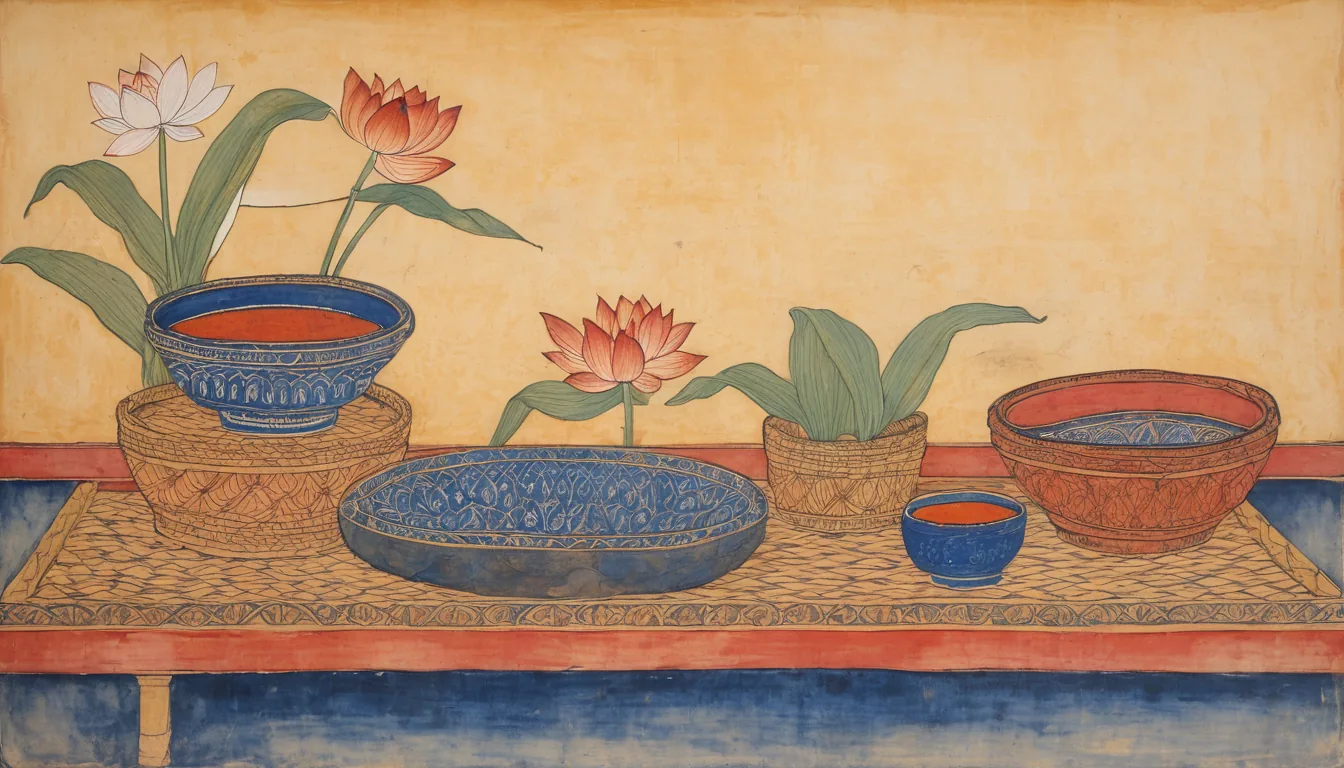
Illustration (AI-generated) of woven reed baskets, dyed cotton threads, and brass vessels in a quiet Thai monastery pavilion. Not a depiction of any specific piece.
Plate I:Illustration (AI-generated) of woven reed baskets, dyed cotton threads, and brass vessels in a quiet Thai monastery pavilion. Not a depiction of any specific piece.

Within the taxonomy of Thai ritual objects (khrueang rang), hoon payon (also romanized as hun phayon, หุ่นพยนต์) refers to a consecrated effigy in human, deva, yaksha, or animal form made from woven plant fibres, sacred cotton cords, or smelted ritual metals [1][2][18]. Unlike iconic Buddha tablets, a thai effigy amulet is conceived in traditional manuals as an animated construct bound through meditative visualization (kasina) and elemental invocation [1][12][18]. Three regional streams have shaped the form: the central riverine cord-and-palm-rib tradition of Phra Nakhon Si Ayutthaya and Chai Nat, the southern metallurgical lineage of Wat Khao Or in Phatthalung Province, and the lower Isan Khmer-Thai tradition of Buriram [1][2][11][15][17].

Tracing these figures requires examining their canonical and literary precedents in Pali commentaries and Siamese epic poetry, the ritual mechanics of elemental invocation (akan 32), and the documented twentieth- and twenty-first-century masters whose works define collector standards [1][2][9][10][13].

Etymology, Canonical Prototypes, and Siamese Literary Accounts

In Thai usage, the compound hun phayon joins two terms [2][18]. As Khao Or teachers explain, hun (หุ่น) denotes a modelled figure, doll, statue, or carving shaped after a living form, while phayon (พยนต์, from Pali/Sanskrit yanta / yantra) denotes an object animated through esoteric consecration (pluk sek) [1][2][18]. Together, the term describes an effigy ritually bound with mindful resolve so that devotees regard it as a watchful sentinel [2][18]. Zoomorphic effigies such as Khwai Thanu and Wua Thanu (buffalo and bull figures of bamboo, bronze, or beeswax) belong to the same family of animal hun phayon [18][19].

A 2025 study by Kittisak Sukkhasem and Methawee Kaeosawang in the Journal of Interdisciplinary Social and Communication Studies traces the earliest Buddhist narrative prototype to the Sumangalavilasini, Buddhaghosa's Pali commentary on the Mahaparinibbana Sutta [1]. When King Ajatasattu of Magadha consulted Phra Mahakassapa Thera on safeguarding the Buddha's relics in an underground chamber, the celestial artisan Vissakamma (Phra Witsanukam) fashioned mechanical warrior figures (bhuta-vahana-yanta, rendered in Thai homilies as hun yon or hun phayon) clutching whirling swords to guard the reliquary for 218 years until Emperor Asoka opened the vault [1].

In classical Siamese literature, the motif appears as battlefield decoys of cloth or grass [9][10]. In the Ramakien, the yaksha general Wirunchambang, son of Phaya Thut of Charuek City, rides his black, red-mouthed steed Ninlahaphahu invisible into battle against Phra Ram [9]. After Phra Phiphek alerts Phra Ram and a Brahmastra arrow slays Ninlahaphahu, Wirunchambang chants a spell over his head-cloth (pha phok sisa) to turn it into a lifelike hun phayon double before hiding in the sea foam of the Sithandorn Ocean [9].

Grass-woven effigy warfare also features in Chapter 89 of Sunthon Phu's Phra Aphai Mani [10]. When Phra Mangkhala and the preceptor Bathluang march against Langka, their vanguard comprises thousands of grass-bound effigy soldiers (phon hun phayon or hun mon) impervious to blades (thang khong thon thaeng fan mai banlai) [10]. The Langkan sage Khru Chakra strews gunpowder and sulfur (din dam kammathan) inside a stockade, lures the effigy vanguard inside through a feigned retreat, and burns the grass hun phayon army to ashes at midnight (hun phayon mon mai pen fai chon) [10].

Southern Thai chronicles similarly record battlefield effigies in the early Bangkok era [11]. According to Phatthalung historical records compiled by the Provincial Office of Buddhism, during the Nine Armies War of B.E. 2328 (1785), after Burmese forces took Chumphon, Chaiya, and Nakhon Si Thammarat, Governor Phraya Phatthalung (Khun) and Phra Maha Chuai of Wat Pa Lelai (trained at Wat Khao Or) distributed takrut and pha prachiat to levies at Tambon Tha Siat [11]. While Phra Maha Chuai sat in meditation binding hun phayon as giant warriors, Burmese scouts perceived an army of towering soldiers and withdrew [11].

Ritual Mechanics, Materials, and Buddhist Dhamma Grounding

Traditional manuals describe the creation of a hoon payon as a meditative procedure (wicha phuk hun) grounded in kasina concentration [12][13][18]:

  1. Generating the Mental Sign (Uggaha-nimitta): The master fixes the form of the effigy in concentration until a stable mental image arises [18].
  2. Invoking the Four Elements (Nun That Thang Si): Using Na Ma Pha Tha (earth, water, wind, fire), the practitioner establishes the material support [12][13][18].
  3. Calling Form, Name, and the Thirty-Two Parts (Riak Rup Riak Nam / Akan 32): The adept recites the five aggregates (khandha 5) and thirty-two bodily constituents (akan 32) in forward and reverse order (anulom patilom), followed by the eye-opening (boek net) chant [5][12][15][18].
  4. Sealing with Heart-Mantras: In the Khao Or lineage, the rite is sealed with Na Ma Pha Tha, Na Mo Put Tha Ya (Five Buddhas), Na Ma A U (Triple Gem), and Na Cha Li Ti (Phra Sivali) [13].

Monastic writers classify hun phayon as non-harmful constructs (sai thep or sai wet) rather than ghosts [15][18]. Sukkhasem and Kaeosawang (2025) note that Ajarn Loy Pho Ngoen's tradition embeds four Buddhist Dhamma principles: Saddha (confidence in moral causality), Iddhipada 4 (aspiration, effort, mindfulness, investigation), Satipatthana 4 (four foundations of mindfulness), and Appamada (heedfulness) [1].

Craftsmen select materials corresponding to their lineage [1][2][18]:

  • Woven Plant Midribs and Thread: Corypha palm midribs (kan bai lan), Imperata grass (ya kha), rattan, or bamboo form an inner core (kaen klang) or hold a tiny takrut scroll of gold, silver, copper, or brass foil, wrapped in red, blue, green, or white cotton thread [1][2][5].
  • Twisted Funeral Cord (Sai Sin Chung Sop): In Chai Nat and Suphan Buri, masters twist cotton cord held by monks leading a coffin (sai sin nam phi, which never touches the corpse), coated in clear lacquer (rak nam kliang) and gold leaf [15].
  • Smelted Ritual Metals (Loha Athan): In Khao Or and lower Isan, figures are cast from temple nails (tapu sangkhawanon), coffin nails, nine-metal yantra sheets (nawaloha), and herbal pastes (maha wan) [12][13][17][18].

Ayutthaya and Central Riverine Lineages

Ajarn Loy Pho Ngoen of Wat Suwan Dararam (Ayutthaya)

The foremost twentieth-century maker of woven hoon payon figures was the lay ascetic Ajarn Loy Pho Ngoen [1][2][6]. Born in Bang Pahan District, Phra Nakhon Si Ayutthaya Province, he studied the manuscripts of Wat Pradu Songtham and trained under Luang Pho Rat of Wat Suwan Dararam [1][2]. Until his death in B.E. 2517 (1974), he lived aboard a wooden houseboat moored along Khlong Khu Mueang near Hua Ro Market and Wat Suwan Dararam [1][2][4]. Twelve historical photographs taken at Raan Sawang Silp opposite Hua Ro Market document Ajarn Loy on his boat with his disciple Ajarn Laem Chaengcharoen, profiled by Daily News in 2025 at age ninety as the last surviving direct assistant [4][5].

Ajarn Loy bound each figure around a palm-leaf midrib (kan bai lan) or miniature takrut, wrapping the body in coloured threads and distinguishing leader figures (hun hua na) from followers (hun luk nong) [1][2]. Disciples sealed early pieces in acrylic plastic at Hua Ro Market and Tha Karong with a carved wooden U syllable (khot u, โค้ดตัวอุ) inside [2][6]. In Komchadluek (2009 and 2012), Ayutthaya specialist Manomai Asawathiranan ("Nung Senakittikun") refuted two myths: Ajarn Loy never dipped cords in tree resin (yang mai), as dark stains come from betel-nut juice (nam mak) blown during consecration; and damage to his stupa (chedi) at Wat Suwan Dararam was caused by amulet thieves rather than lightning [2][3].

Wat Pradu Songtham and the Wat Phra Yatkaram Lineage

Searches for wat phra yat hoon payon reflect the overlap between Ayutthaya's lay and monastic lineages sharing the Wat Pradu Songtham curriculum [1][6][7][8]. In Tambon Phai Ling, Phra Nakhon Si Ayutthaya District, Wat Phra Yatkaram (Wat Phra Yat, originally Wat Phop Yat) was led by Phra Upatcha Klan Thammachoti (Luang Pho Klan, B.E. 2390 - 21 July B.E. 2477, age 87, 60 vassa), ordained at Wat Pradu Songtham in B.E. 2417 under Phra Yan Trailok (Sa-at) [6][7]. His lineage continued under Luang Pho Aon and Phra Boran Khanissorn (Luang Pho Chalerm Khemadassi, who died on 16 May B.E. 2564 / 2021 at age ninety-six, 77 vassa, after founding a 100-million-baht educational foundation in the names of Luang Pho Klan and Luang Pho Aon on 19 May B.E. 2558) [7][8]. Because both Wat Phra Yat's abbots and Ajarn Loy at Wat Suwan Dararam drew from Wat Pradu Songtham, collectors often associate Ayutthaya cord-and-takrut effigies with this shared heritage [1][6][7][8].

Luang Pu Suk of Wat Pak Khlong Makham Thao and Suphan Buri

Along the Chao Phraya and Tha Chin rivers, a related cord-bound lineage stems from Phrakhru Wimon Khunakon (Luang Pu Suk Kesaro, B.E. 2390 - 23 December B.E. 2466) of Wat Pak Khlong Makham Thao in Wat Sing District, Chai Nat Province, ordained at age twenty-two at Wat Pho Thong Lang under Phrakhru Choei Chanthasiri and trained in rasayanawet alchemy under Luang Pu Thap of Wat Anongkharam [14][15]. In the 1993 memorial volume of M.C. Roengchitcharaeng Abhakara (Anuson Than Ying Roeng, p. 228), the princess recorded that her father, Admiral Prince Abhakara Kiartivongse, Prince of Chumphon (disciple of Luang Pu Suk), moulded small hun phayon figures and planted them around the lawn of Nang Loeng Palace [16].

As documented by Komchadluek (2015), Luang Pu Suk tied funeral leading cord (sai sin chung sop) into figures by the riverbank on the twelfth-month full moon (Loy Krathong night), casting them into the river and keeping those that swam upstream [15]. Passed via Luang Pho Pi of Wat Phihan Daeng to 86-year-old Luang Pu Chan of Wat Sampasiw in Suphan Buri, this method produced 1,999 hand-twisted funeral-cord hun phayon ("Ta Ruay") coated in clear lacquer and gold leaf in B.E. 2558 (2015) [15].

The Southern Khao Or Lineage and Lower Isan Traditions

Phor Than Kloy Anomo of Wat Phu Khao Thong (Phatthalung)

In southern Thailand, the principal monastic lineage for cast-metal and herbal-paste hoon payon belongs to Wat Khao Or in Tambon Makok Nuea, Khuan Khanun District, Phatthalung Province, founded in B.E. 1651 (originally Wat Pradu Hom) on the site of a Brahmanical cave hermitage near Sathing Phra [11]. In the early twenty-first century, Khao Or effigy making was led by Phrakhru Phiphit Worakit (Phor Than Kloy Anomo, born 9 February B.E. 2472 / 1929, ordained 1 March B.E. 2493 / 1950 at Wat Don Sala under his uncle Phrakhru Sitthiyarat / Phor Than Iat) of Wat Phu Khao Thong, who inherited the notebooks of Phor Than Thong Thao, Phor Than Iat, and Phor Than Pan [12][13].

Phor Than Kloy modelled his effigy as Ta Pakhao (ตาปะขาว), a white-robed lay ascetic, starting with his mid-B.E. 2548 (2005) coffin-nail Hoon Payon Tua Khru [12][13]. On 25 September B.E. 2555 (2012), he consecrated the Hoon Payon Ta Pakhao Muen Yant edition across twelve material variants (nawaloha, alpaca, brass, copper, lead, and white or black maha wan paste) using the Maha Wet Maha Mongkhon alloy of coffin nails from over 200 cremations across ten temples, 108 nine-metal yantra sheets, antique sprues, and Khao Or iron ore, backed by Khao Or yantras such as Yant Phra Namo Thongchai and Na Mai Banthat [12][13].

Luang Pho Mian Kalyano of Wat Ban Chaniang (Buriram)

In lower Isan, Luang Pho Mian Kalyano of Wat Ban Chaniang (Krasang District, Buriram; born October B.E. 2479 / 1936 in Svay Rieng, Cambodia, ordained at Wat Yot Thong in Kampot, in Thailand since B.E. 2518 / 1975) transmitted a Khmer Angkor Wat guardian Hoon Payon Akhom lineage from Ajarn Svay and Ajarn Ta Yantak, moving from paper and cloth figures to his first cast-metal edition in B.E. 2554 (2011) [17][18].

Regional Lineage Primary Masters Materials & Construction Distinctive Features
Ayutthaya (Wat Suwan Dararam / Wat Pradu Songtham) Ajarn Loy Pho Ngoen (d. B.E. 2517); Ajarn Laem Chaengcharoen [1][2][5] Palm-leaf midrib (kan bai lan) or takrut core wrapped in coloured cotton thread [1][2] Hua Ro Market acrylic casing with wooden U code (khot u); no tree resin used [2][6]
Chai Nat & Suphan Buri Luang Pu Suk (Wat Pak Khlong Makham Thao); Luang Pu Chan (Wat Sampasiw) [14][15] Hand-twisted funeral leading cord (sai sin chung sop) with clear lacquer and gold leaf [15] Consecrated on the 12th lunar month full moon with boek net and akan 32 [15]
Southern Khao Or (Phatthalung) Phra Maha Chuai (B.E. 2328); Phor Than Kloy Anomo (Wat Phu Khao Thong) [11][12][13] Maha Wet Maha Mongkhon 9-metal alloy, coffin nails, Khao Or ore, and maha wan pastes [12][13] Depicted as ascetic Ta Pakhao; sealed with 4 heart-mantras and Khao Or yantras [12][13]
Lower Isan Khmer-Thai (Buriram) Luang Pho Mian Kalyano (Wat Ban Chaniang) [17][18] Early paper and cloth figures; cast metal from inscribed yantra sheets from B.E. 2554 [17] Rooted in Svay Rieng and Kampot Khmer Hoon Payon Akhom manuals [17]

Where to see pieces like this - Our sister shop, Shogun X Amulets, has a page on Hoon Payon effigy amulets: https://shogunxamulets.com/?s=Hoon+Payon&post_type=product. Disclosure: Shogun X Amulets and ThaiAmuletExchange.com are run by the same group.

Reference Q&A · Direct Answer Capsules

Common Questions

Q01

What does the term Hoon Payon mean in Thai tradition?

In Thai ritual vocabulary, *hun* (หุ่น) means a modelled figure, doll, or statue, while *phayon* (พยนต์, related to Pali/Sanskrit *yanta* or *yantra*) refers to an object animated through esoteric consecration [1][2][18]. A *hoon payon* is therefore an effigy figure, shaped as a person, ascetic, warrior, deva, or animal, that a monastic or lay master has consecrated through meditative visualization (*kasina*) and elemental stanzas so that devotees regard it as a watchful sentinel [1][12][18].

Q02

Where does the concept of Hoon Payon appear in Buddhist texts and Thai literature?

A 2025 academic study traces the canonical prototype to the *Sumangalavilasini* commentary on the *Mahaparinibbana Sutta*, where Vissakamma crafts mechanical sword-bearing warrior effigies (*bhuta-vahana-yanta*) for King Ajatasattu to guard the Buddha's relics for 218 years until Emperor Asoka's reign [1]. In Siamese literature, the yaksha general Wirunchambang turns his head-cloth into a *hun phayon* double in the *Ramakien* [9], and grass-woven *hun phayon* troops fight in Chapter 89 of Sunthon Phu's *Phra Aphai Mani* [10].

Q03

How is a traditional Hoon Payon consecrated?

Traditional manuals describe the rite (*wicha phuk hun*) as a meditative process grounded in *kasina* concentration [18]. After establishing a clear mental image (*uggaha-nimitta*), the master invokes the four elements of earth, water, wind, and fire (*Na Ma Pha Tha*) and calls forth form, name (*riak rup riak nam*), the five aggregates (*khandha 5*), and the thirty-two bodily constituents (*akan 32*) in forward and reverse order before performing the eye-opening (*boek net*) chant [12][13][15][18].

Q04

Who was Ajarn Loy Pho Ngoen and how are his Hoon Payon identified?

Ajarn Loy Pho Ngoen (who passed away in B.E. 2517 / 1974) was an Ayutthaya lay ascetic who lived on a houseboat moored along Khlong Khu Mueang near Hua Ro Market and Wat Suwan Dararam [1][2][4]. Having studied the Wat Pradu Songtham corpus, he bound palm-leaf midribs (*kan bai lan*) or miniature *takrut* scrolls with coloured cotton threads [1][2]. Early disciples encased original pieces in acrylic plastic at Hua Ro Market with a tiny carved wooden *U* code (*khot u*) inside [2][6].

Q05

Why do collectors search for Wat Phra Yat Hoon Payon?

Wat Phra Yatkaram (*Wat Phra Yat*) in Phra Nakhon Si Ayutthaya District was the seat of Luang Pho Klan Thammachoti (B.E. 2390-2477), Luang Pho Aon, and Luang Pho Chalerm Khemadassi (d. B.E. 2564), who transmitted the esoteric curriculum of Ayutthaya's ancient Wat Pradu Songtham academy [6][7][8]. Because Ajarn Loy Pho Ngoen at nearby Wat Suwan Dararam also drew from the Wat Pradu Songtham ritual tradition, collectors often associate Ayutthaya cord-and-*takrut* effigy lore with the broader Wat Pradu Songtham and Wat Phra Yat lineage [1][6][7].

Q06

What is a Ta Pakhao Hoon Payon in the Khao Or lineage?

In the southern ritual lineage of Wat Khao Or in Phatthalung Province, Phrakhru Phiphit Worakit (Phor Than Kloy Anomo, born B.E. 2472) of Wat Phu Khao Thong modelled his signature *hoon payon* as *Ta Pakhao* (ตาปะขาว), a white-robed lay ascetic holding the Buddhist precepts [12][13]. Beginning in mid-B.E. 2548 (2005) and continuing with his B.E. 2555 (2012) *Muen Yant* series, these figures were cast from nine-metal yantra sheets, Khao Or iron ore, and crematory nails or pressed from *maha wan* herbs [12][13].

Q07

Are Hoon Payon considered ghosts or spirit amulets?

Monastic commentators and lineage holders distinguish *hoon payon* from necromantic ghost amulets (*sai phrai*) [1][15][18]. Although some traditions incorporate funerary materials such as crematory nails or monk-held leading cords (*sai sin chung sop* that never touch the corpse), the effigy itself is animated by elemental meditation (*That Si*), *akan 32* recitation, and Buddhist heart-mantras (*Na Mo Put Tha Ya*, *Na Ma A U*), rather than by binding a deceased person's spirit [1][13][15].

Verified Sources (19)

  1. Kittisak Sukkhasem and Methawee Kaeosawang, "หลักพุทธธรรมในเครื่องรางหุ่นพยนต์ของอาจารย์ลอย โพธิ์เงิน (Buddhist Dhamma Principles in the Hoon Payon Talismans of Ajarn Loy Pho Ngoen)", *Journal of Interdisciplinary Social and Communication Studies (MBUISC)*, Vol. 1 No. 6, pp. 42-51, 2025 — canonical prototype in the *Sumangalavilasini* commentary on the *Mahaparinibbana Sutta* (King Ajatasattu, Phra Mahakassapa, Vissakamma's sword-bearing relic-guarding effigy for 218 years until King Asoka), biography of Ajarn Loy Pho Ngoen (born in Bang Pahan, houseboat at Hua Ro Market / Wat Suwan Dararam, studied at Wat Pradu Songtham and under Luang Pho Rat, died B.E. 2517), inner core (*kaen klang*) and outer thread wrapping (*tua hun*), and four Dhamma principles (*Saddha*, *Iddhipada 4*, *Satipatthana 4*, *Appamada*).
  2. Traithep Kraingu, "อาจารย์ลอย โพธิ์เงิน ฆราวาสผู้สร้างตำนานหุ่นพยนต์อันดับ ๑ ของเมืองไทย", *Komchadluek*, 24 December 2012 — definitions of *hun* and *phayon*, interview with Ayutthaya specialist Manomai Asawathiranan ("Nung Senakittikun"), palm-leaf rib (*kan bai lan*) and coloured thread construction, leader (*hun hua na*) vs follower (*hun luk nong*) figures, Hua Ro Market and Tha Karong acrylic plastic encasement with wooden *U* code (*khot u*), refutation of the tree-resin myth (stains are betel-nut juice *nam mak*), and refutation of the stupa lightning myth (damage was caused by amulet thieves).
  3. Komchadluek Online, "มนต์เสน่ห์ความขลัง 'หุ่นพยนต์' อ.ลอย โพธิ์เงิน", 11 June 2009 — Manomai Asawathiranan's documentation of Ajarn Loy Pho Ngoen's woven effigies and their traditional use among Ayutthaya riverine households.
  4. Daily News Online, "เหนือลิขิต ประกาศิตฟ้าดิน : 'ภาพถ่ายชุดประวัติศาสตร์' อาจารย์ลอย โพธิ์เงิน", 2026 — archive of 12 historical studio photographs of Ajarn Loy Pho Ngoen taken at Raan Sawang Silp across from Hua Ro Market in Ayutthaya, showing rites aboard his houseboat with disciple Ajarn Laem Chaengcharoen.
  5. Daily News Online, "เหนือลิขิต ประกาศิตฟ้าดิน : 'อาจารย์แหลม แจ้งเจริญ' ศิษย์เอก อาจารย์ลอย โพธิ์เงิน", 16 August 2025 — profile of 90-year-old lay master Ajarn Laem Chaengcharoen, direct surviving disciple of Ajarn Loy Pho Ngoen on the Wat Suwan Dararam houseboat, and his preservation of palm-rib and cotton-cord binding with four-element and *akan 32* invocations.
  6. Daily News Online, "ส่องพระยอดนิยม ประจำวันที่ 28 มิถุนายน พ.ศ. 2568", 28 June 2025 — collector authentication standards for both Luang Pho Klan Thammachoto of Wat Phra Yatkaram's B.E. 2469 first-issue copper medal (*phim kho bet*) and middle-period Ajarn Loy Pho Ngoen *Hoon Payon* in original plastic casing with the *U* code (*khot u*).
  7. Thai Wikipedia, "วัดพระญาติการาม", 2026 — history of Wat Phra Yatkaram (*Wat Phra Yat*, originally *Wat Phop Yat*, Tambon Phai Ling, Phra Nakhon Si Ayutthaya District), biography of Luang Pho Klan Thammachoti (B.E. 2390 - 21 July B.E. 2477, age 87, 60 *vassa*), his B.E. 2417 ordination at Wat Pradu Songtham under Phra Yan Trailok (Sa-at), and succession by Luang Pho Aon.
  8. Wanchai, "หลวงพ่อเฉลิม เกจิดังกรุงเก่ามรณภาพ ตั้งมูลนิธิไว้ 100 ล้านสร้างคนสร้างชาติ", *Banmuang*, 22 May 2021 — Phra Boran Khanissorn (Luang Pho Chalerm Khemadassi, passed away 16 May B.E. 2564 at age 96, 77 *vassa*), abbot of Wat Phra Yatkaram, lineage successor to Luang Pho Klan and Luang Pho Aon in the Wat Pradu Songtham tradition, and founder of the 100-million-baht Luang Pho Klan - Luang Pho Aon Foundation on 19 May B.E. 2558.
  9. Thai Wikipedia, "วิรุณจำบัง", 2026 — *Ramakien* episode in which Wirunchambang (son of Phaya Thut of Charuek City, riding the black red-mouthed horse Ninlahaphahu), after Phra Ram's Brahmastra arrow slays his mount, chants a spell to turn his head-cloth (*pha phok sisa*) into a *Hoon Payon* double before hiding in the sea foam of the Sithandorn Ocean.
  10. Sunthon Phu, *Phra Aphai Mani*, Chapter 89 ("ตอนที่ ๘๙ ทัพสุดสาครตีทัพพระมังคลาพ่าย จนเทวสินธุ์ตามไปถึงเมืองสำปันหนา"), Vajirayana Digital Library — deployment of grass-woven *Hoon Payon* troops (*phon hun phayon* / *hun mon*) impervious to blades by Phra Mangkhala and Bathluang, and Khru Chakra's counter-strategy of luring them into a stockade laced with gunpowder and sulfur (*din dam kammathan*) to burn them with fire at midnight.
  11. MGR Online, "'วัดเขาอ้อ พัทลุง' สุดยอดแหล่งวิทยาคมทางไสยศาสตร์แห่งแดนใต้ วัดที่ 'ขุนพันธ์' เป็นลูกศิษย์", 3 October 2024 — founding of Wat Khao Or (originally Wat Pradu Hom) in Tambon Makok Nuea, Khuan Khanun District, Phatthalung in B.E. 1651, its Brahmanical cave origins near Sathing Phra, and the B.E. 2328 (1785) Phatthalung chronicle account of Phraya Phatthalung (Khun) and Phra Maha Chuai of Wat Pa Lelai binding *Hoon Payon* warrior figures at Tambon Tha Siat to deter advancing Burmese forces.
  12. Traithep Kraingu, "หุ่นพยนต์ตาปะขาวตักศิลาไสยเวทแดนใต้", *Komchadluek*, 19 September 2012 — Khao Or ritual formula (*riak rup riak nam* from the 4 elements to establish *akan 32*), Phor Than Kloy Anomo of Wat Phu Khao Thong's mid-B.E. 2548 coffin-nail *Hoon Payon Tua Khru*, and his 25 September B.E. 2555 *Hoon Payon Ta Pakhao Muen Yant* edition in 12 material variants inscribed with Khao Or yantras.
  13. Traithep Kraingu, "พระองค์ครู : หุ่นพยนต์ตาปะขาว", *Komchadluek*, 13 August 2012 — biography of Phor Than Kloy Anomo (born 9 Feb B.E. 2472, ordained 1 Mar B.E. 2493 at Wat Don Sala under his uncle Phor Than Iat), composition of the *Maha Wet Maha Mongkhon* alloy (2 tins of coffin nails from >200 cremations across 10 temples, 108 yantra plates across 9 metals, sprues of Phor Than Pan and Phor Than Iat, and Khao Or iron ore), and the four heart-mantras (*Na Ma Pha Tha*, *Na Mo Put Tha Ya*, *Na Ma A U*, *Na Cha Li Ti*).
  14. Thairath Online, "พระเครื่องหลวงปู่ศุข วัดปากคลองมะขามเฒ่า รุ่นฮิตหลักล้าน", 18 January 2023 — biography of Phrakhru Wimon Khunakon (Luang Pu Suk Kesaro, B.E. 2390 - 23 Dec B.E. 2466) of Wat Pak Khlong Makham Thao (Wat Sing District, Chai Nat), his ordination at Wat Pho Thong Lang under Phrakhru Choei Chanthasiri, *rasayanawet* study under Luang Pu Thap of Wat Anongkharam, and traditional accounts of his *Hoon Payon* rites.
  15. Komchadluek Online, "'หุ่นพยนต์'สายสิญจน์ควั่นหลวงปู่จันทร์วัดสำปะซิว", 31 December 2015 — Luang Pu Suk's full-moon 12th-lunar-month riverside rite using funeral leading cord (*sai sin chung sop* / *sai sin nam phi* that does not touch the corpse), transmission through Luang Pho Pi of Wat Phihan Daeng to 86-year-old Luang Pu Chan of Wat Sampasiw (Suphan Buri), and Luang Pu Chan's B.E. 2558 edition of 1,999 hand-twisted cord *Hoon Payon* ("Ta Ruay") coated in clear lacquer and gold leaf.
  16. MGR Online, "กรมหลวงชุมพรฯ เลี้ยงผี 'นางนาก'", 24 July 2019 — citation of the 1993 royal cremation volume *Anuson Than Ying Roeng* (for M.C. Roengchitcharaeng Abhakara at Wat Debsirindrawas, 24 Nov B.E. 2536, p. 228) recording that Admiral Prince Abhakara Kiartivongse, Prince of Chumphon, moulded small *Hoon Payon* figures and planted them around the lawn of Nang Loeng Palace.
  17. Komchadluek Online, "หลวงพ่อเมียน วัดบ้านจะเนียง ผู้สืบสานตำรา 'หุ่นพยนต์อาคม'", 11 May 2011 — biography of Luang Pho Mian Kalyano of Wat Ban Chaniang (Krasang District, Buriram; born Oct B.E. 2479 in Svay Rieng, Cambodia; studied under Ajarn Svay and Ajarn Ta Yantak; ordained at Wat Yot Thong, Kampot; entered Surin/Buriram on *thudong* in B.E. 2518) and his Khmer Angkor Wat guardian *Hoon Payon Akhom* tradition (early paper/cloth figures, first cast-metal issue in B.E. 2554 / 2011).
  18. Traithep Kraingu, "หุ่นพยนต์ข้ารับใช้ผู้ซื่อสัตย์รูปจำลอง'คน สัตว์ เทวดา ยักษ์'", *Komchadluek*, 17 March 2015 — material typology of *Hoon Payon* (grass, leaf ribs, vines, rattan, wood, wax, thread, cloth, clay, stone, silver, gold, temple nails, coffin nails), comparison with Japanese Onmyodo *shikigami*, and the *kasina* consecration sequence (*uggaha-nimitta*, 4 elements, 5 aggregates, and *akan 32* in forward and reverse order).
  19. Thai Wikipedia, "ควายธนู (Khwai Thanu)", 2026 — classification of zoomorphic guardian effigies such as *Khwai Thanu* and *Wua Thanu* (woven bamboo, beeswax, clay, or bronze) as animal forms of *Hoon Payon*.
Cross-Referenced Dossiers

How this article was checked

Each factual statement was traced to one of the independent sources above before publication: 24 statements checked. 1claims from the topic's starting material could not be verified and were left out, and 1 claims that an object brings luck, protection or other outcomes were removed — this encyclopedia describes objects, not outcomes.