
Luang Pu Tuad (Wat Chang Hai Lineage)
Revered 17th-century southern monk immortalized in the BE 2497 108-herb Nuea Wan and BE 2500–2508 metal series
Venerates Somdej Chao Phakho (Luang Pu Tuad, 16th–17th century Ayutthaya period), the legendary southern patriarch associated with Wat Phakho (Songkhla) and Wat Chang Hai (Pattani). In BE 2497 (1954 CE), Phra Ajarn Tim Dhammataro (Abbot of Wat Chang Hai) and Anataphindika layman Koson Kananurak created the historic 108-herb Nuea Wan first edition, establishing the most actively traded monastic lineage in Thailand, Malaysia, and Singapore.
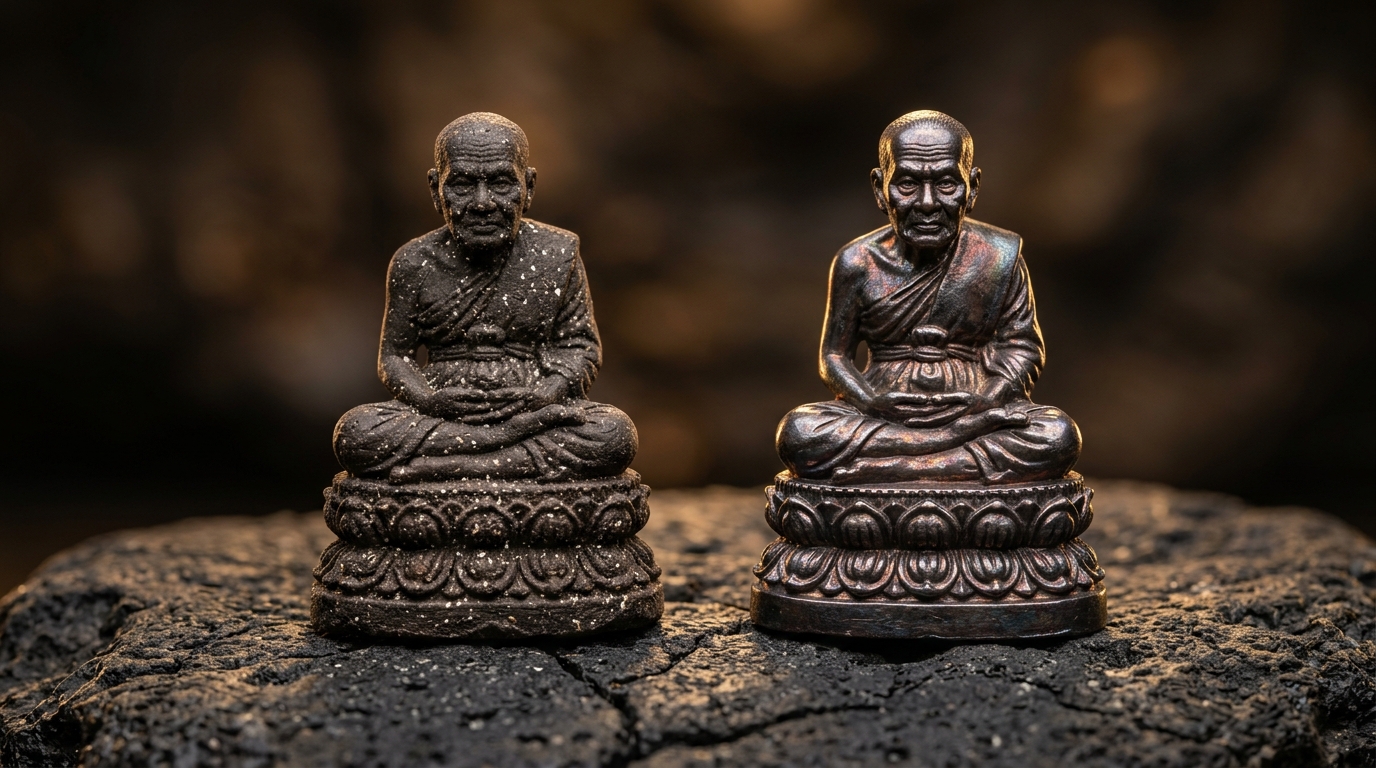
Elderly monk seated in Samadhi on a double lotus pedestal inside a Sema or arch silhouette.
First batch (BE 2497) compounded from 108 raw herbal rhizomes (Nuea Wan) and black mineral flecks (Rae Kamphaeng Din); later batches (BE 2500–2508) cast and struck in bronze, copper, and Alpaca.
Luang Pu Tuad is seated on a double inverted-and-upright lotus throne (Bua Khwam Bua Ngai), representing Bodhisattva compassion grounded in both the mundane and supramundane realms.
The black mineral grains (Rae Kamphaeng Din / Din Kakyayak) embedded in the BE 2497 herbal body represent the primordial purity of the southern earth.
For BE 2497 Nuea Wan: herbal shrinkage, whitish organic bloom (Khai Wan), and base puncture hole; for Rian Sema / Lang Tao Reed: die-cut rim teeth and mould lines.
Namo Bodhisatto Ākantimāya Iti Bhagavā (14-Syllable Wat Chang Hai Canonical Mantra)- ◆BE 2497 Nuea Wan First Issue (Pim Yai A/B/C, Pim Klang, Pim Phra Rod)
- ◆BE 2500 Rian Sema Roon Raek (Pim Hua To — First Metal Medallion)
- ◆BE 2505 Lang Tao Reed (Flat-Iron Back Cast Bronze — Pim Yai A/B, Klang, Lek)
- ◆BE 2505 Lang Nangsue (Stamped Lettering Back — Yai & Lek)
- ◆BE 2508 Rianเลื่อนสมณศักดิ์ (Ecclesiastical Promotion Sema Medallion)